By Yvette Ehler, owner and groomer at Green Dog Mobile Grooming. Grooming since 2009.
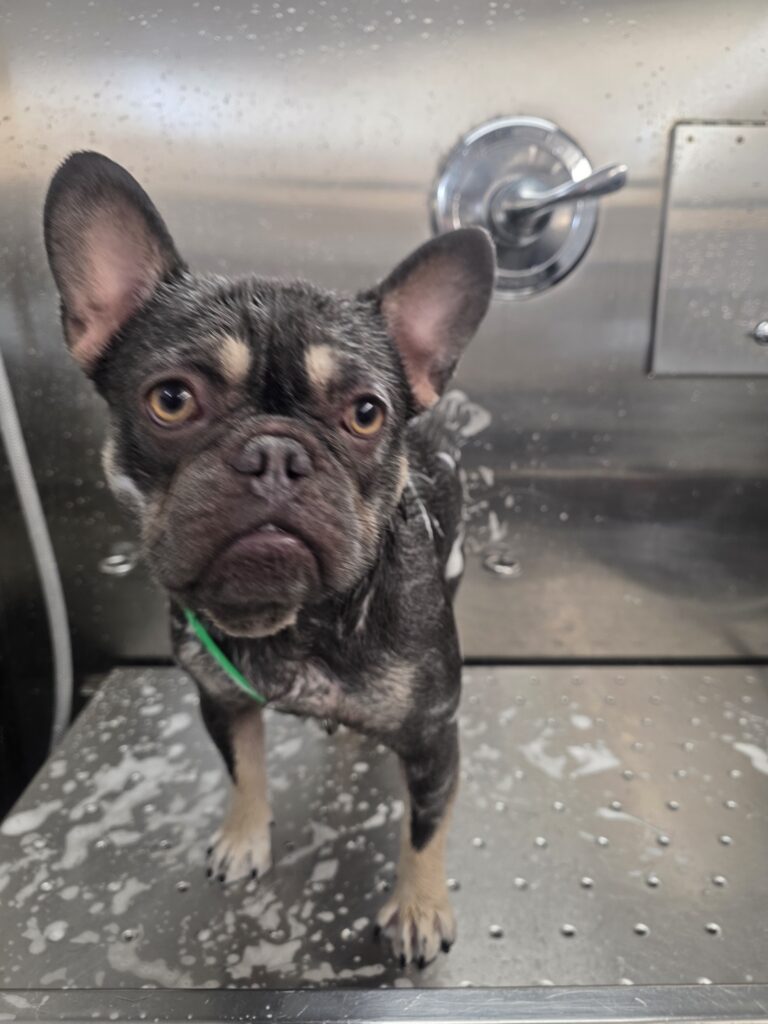
A good bath makes the rest of the groom easier. I wet the whole coat, use shampoo at the correct strength, and rinse thoroughly. Product left behind can make drying, brushing, and finishing harder.
If you have bathed your dog carefully and still ended up fighting the coat afterward, bathing technique is one place to check. Incomplete saturation, excess product or a rushed rinse can make the later brushing and drying harder.
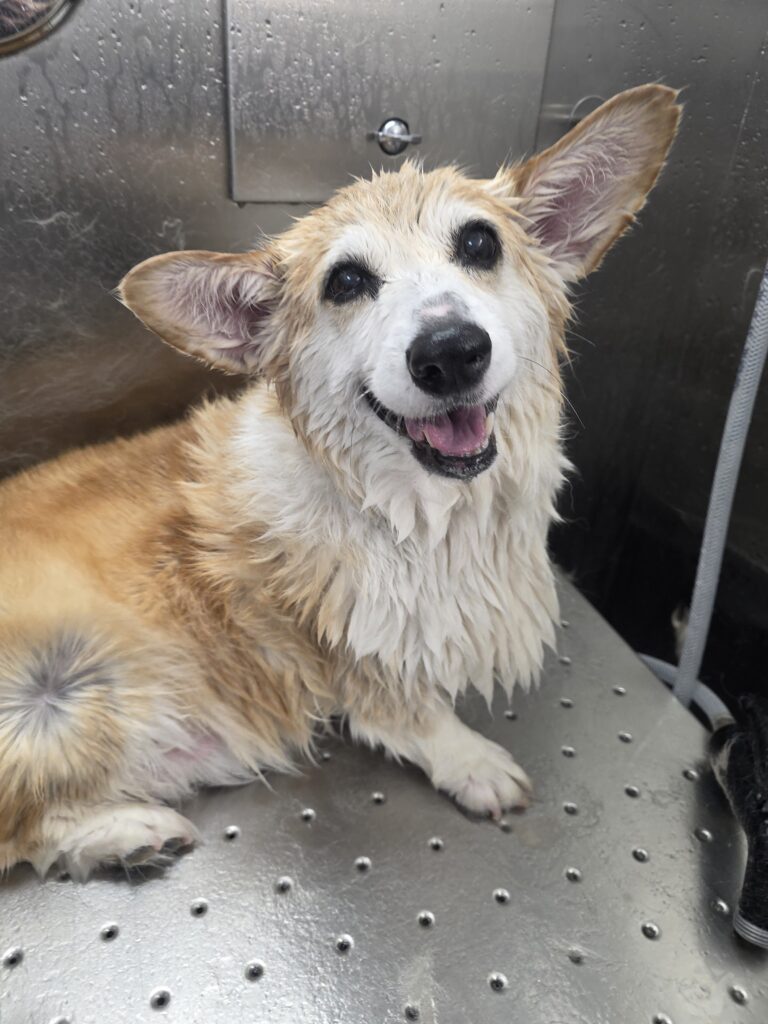
Bathing technique changes with coat structure. Smooth coats are generally quicker to saturate and rinse. A dense double coat can appear wet at the surface while the undercoat remains comparatively dry. Curly and drop coats also require complete saturation and rinsing because residual product and uneven moisture interfere with combing, drying, clipping and scissoring.
I Dilute Concentrated Shampoo Before It Goes on the Dog
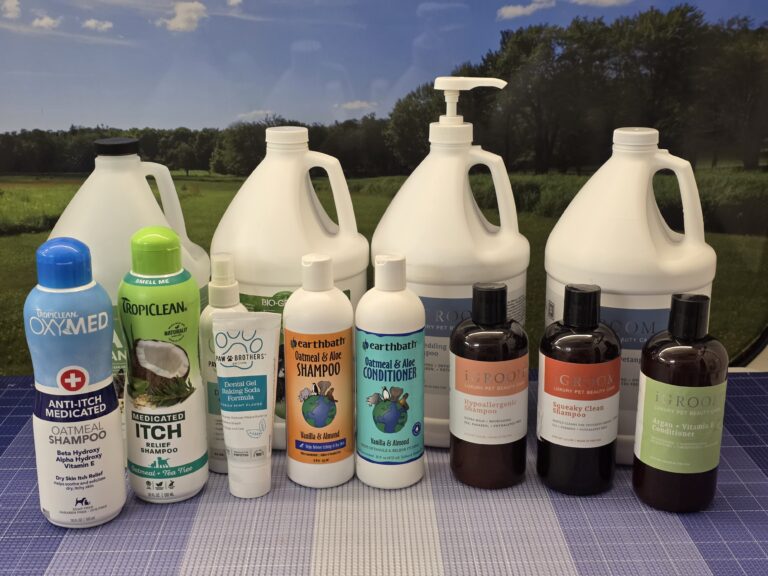
Professional shampoos are often concentrates, meant to be mixed with water before use according to the manufacturer’s directions. I would rather have a working solution that moves through the coat than a thick concentrate sitting on top of it. Distribution and rinseability matter as much as cleansing strength. The dilution ratio belongs to the specific product, so I follow the manufacturer rather than assuming every concentrate mixes the same way. The dilution guide works through how to read a ratio, what a bottle actually produces, and how to mix it without ending up with a container of foam.
Concentrates can also carry a practical environmental advantage. One container produces substantially more usable shampoo than the same volume of ready-to-use product, which can reduce packaging and shipping per bath. The formulation still has to do the grooming job first, but concentration is one of the documented attributes I weigh when two otherwise comparable products are on the shelf.
Saturate the Coat Completely Before Any Shampoo
I want the coat thoroughly wet before cleanser touches it. On a short coat that takes moments. On a dense double coat, water often needs to be worked through several layers before the undercoat is saturated. If water is beading off, or the coat beneath the surface still feels dry to your fingers, shampoo will not distribute evenly no matter how much you use.
It is easy to rush this step, but complete saturation makes the rest of the bath easier. A properly saturated coat takes diluted shampoo more evenly, and the rinse can carry loosened oil and debris back out instead of leaving concentrated patches behind.
I Choose Shampoo for the Job the Coat Needs
No single shampoo suits every dog. A coat carrying heavy residue may need a more clarifying cleanser. A coat that is already clean but difficult to comb may benefit more from conditioning than from stronger cleansing. The useful question is what this particular coat needs removed or improved today, not which bottle has the most appealing label. The shampoo selection guide goes further into reading an ingredient list and telling a named certification apart from marketing language.
I also give weight to meaningful environmental attributes when they are documented and relevant. Manufacturer-stated biodegradable ingredients, naturally derived ingredients, concentrated formats, refill systems, and reduced packaging can all matter. What I will not do is treat the words eco-friendly, natural, or green as proof on their own. A product-specific claim needs to come from the manufacturer or another appropriate source, and it should be scoped to the product that actually carries it.
Conditioner Changes Hair-to-Hair Friction
I use conditioner when it helps the coat separate and comb through. On long or curly hair, that can make brushing easier. On a double coat, it can help loose undercoat come out during drying. The amount depends on the coat.
It still has to rinse out properly. More product is not automatically better, and a coat left feeling coated or heavy is harder to dry and harder to finish cleanly. I would rather use the right amount and rinse thoroughly than leave extra behind hoping it will help. The conditioner and detangler guide covers rinse-out and leave-in products separately, and what a detangling spray can and cannot do about an existing mat.
Rinsing Is Where a Good Bath Is Won or Lost
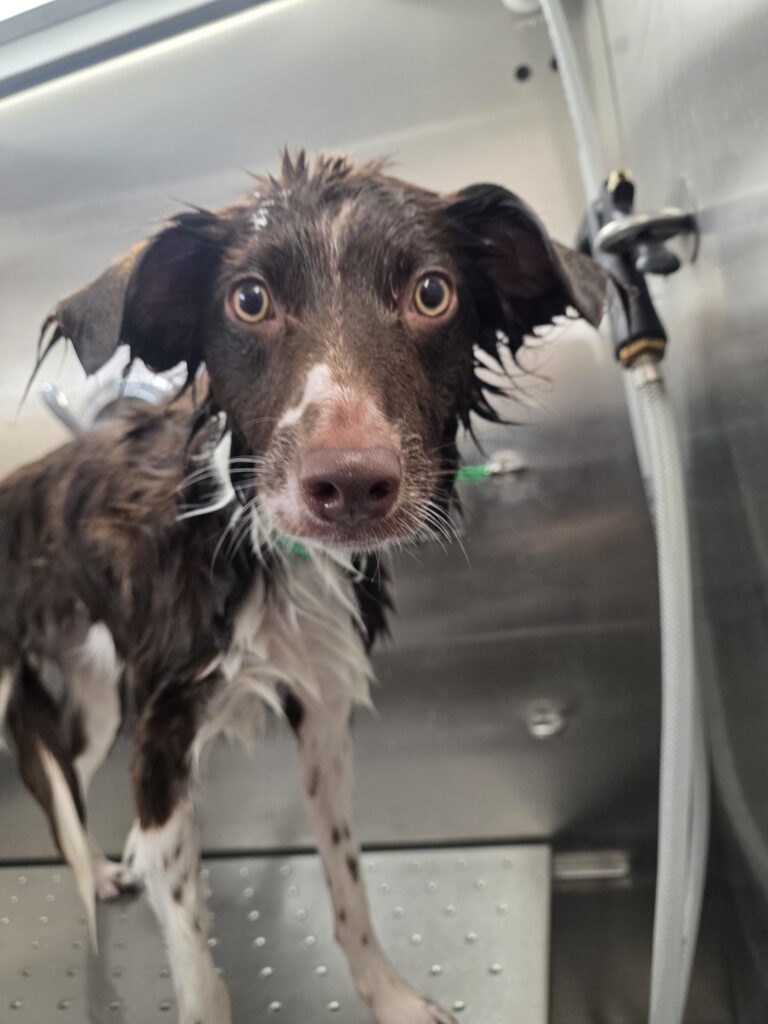
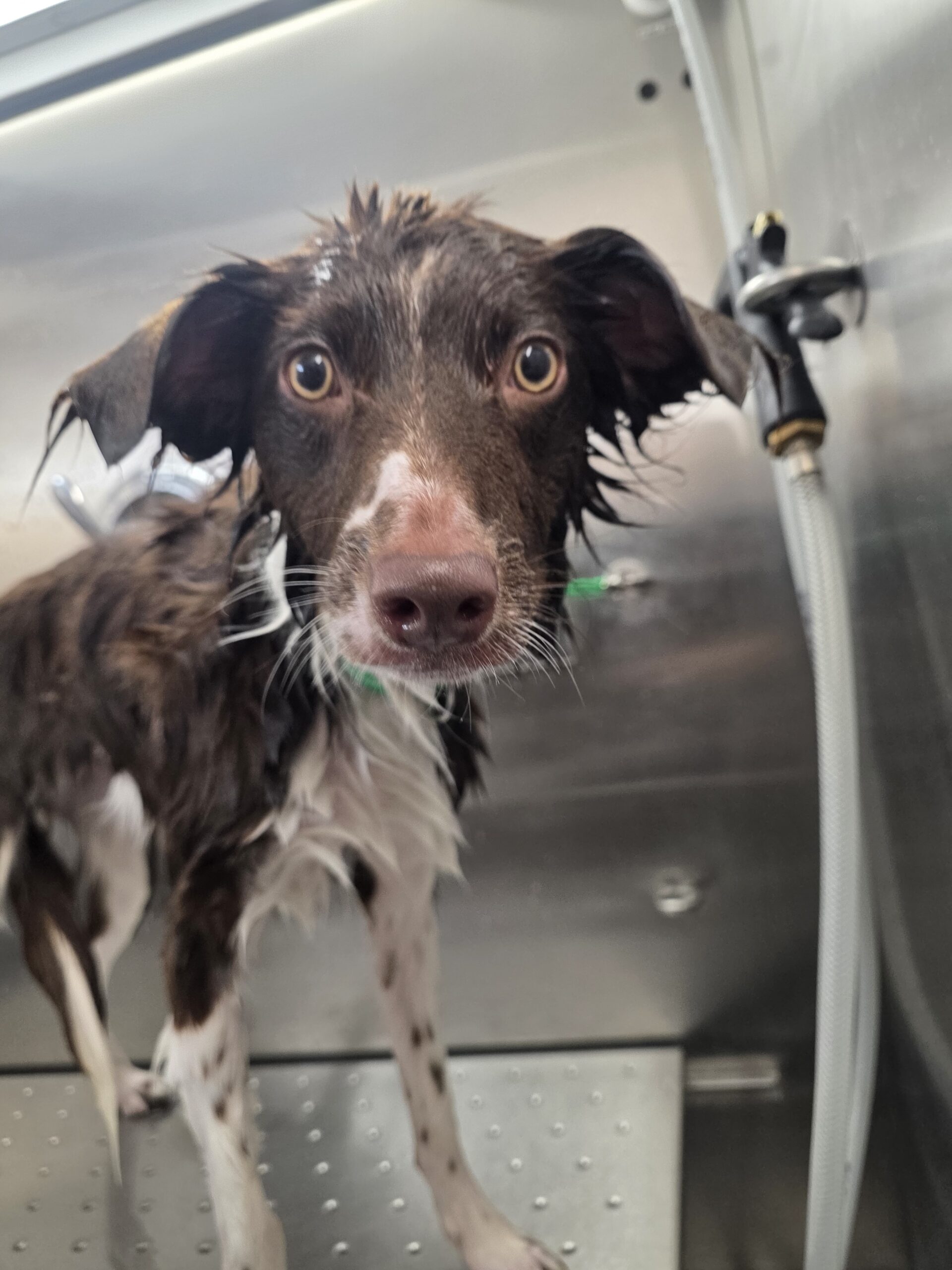
I keep rinsing until the water runs clean and the coat no longer feels slippery. Dense areas around the neck, chest, rear, and tail hold product much longer than flatter areas, so check those with your hands rather than judging by how the back feels. Leftover product changes the feel of the coat and quietly interferes with everything that comes after.
This matters even more at home, where tub water pressure is lower than professional equipment. Work in sections, separate dense coat with your free hand, and aim water through the coat rather than only across the top of it. That can make the rinse more complete.
Start Drying Immediately
Once the rinse is done, I take out as much water as I can with towels before moving to airflow. I do not scrub long or curly coats with a towel, because twisting wet hair together creates tangles that were not there a minute earlier. Blotting and squeezing water out of sections is gentler and leaves you with a coat that is ready to dry properly.
Where you go next depends on the coat. The Dog Drying & Finishing guides cover towel work, high-velocity drying, coat separation, and how to tell when a dense area is dry rather than just dry on the surface.
A Better Bath Makes Every Later Step Easier
The bath is where I set up the rest of the groom. Good saturation, correct dilution, appropriate conditioning, and a thorough rinse give me a coat that will dry, brush, comb, deshed, or clip the way it should. Skipping one of those steps usually does not save time. It just moves the problem into the next part of the groom, where it is harder to fix.
If you are working on a specific coat type, start with the Dog Coat Types & Coat Care section and then use the bathing guides to adapt the process to that coat, rather than following one routine for every dog.