
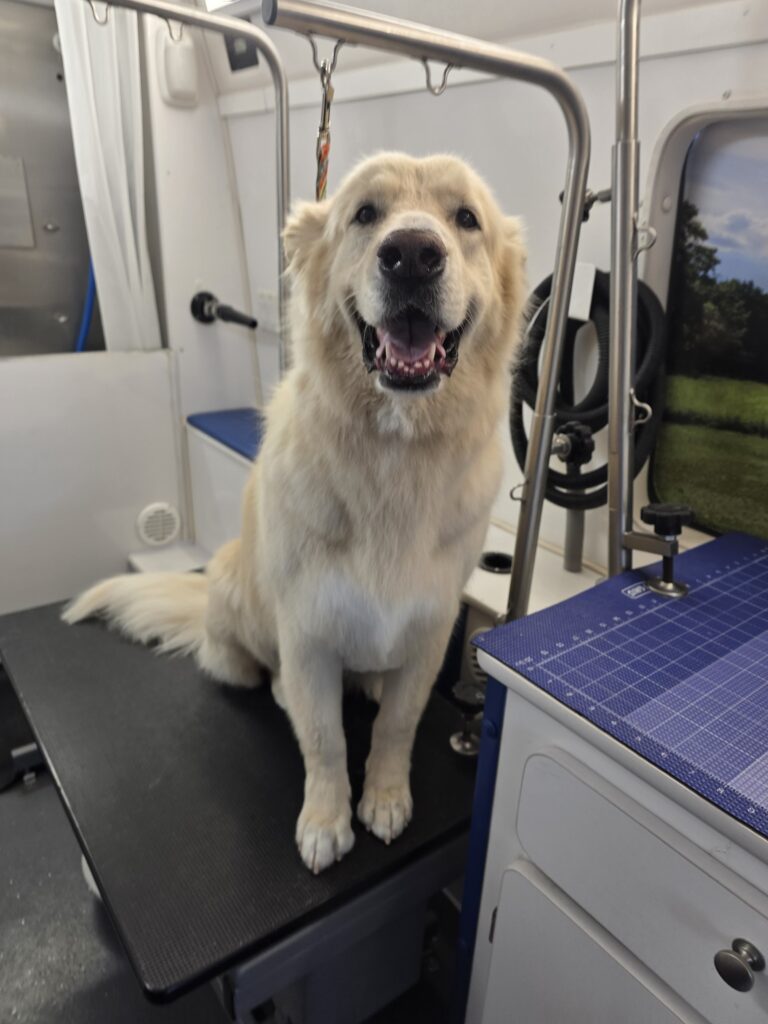
What the appointment includes
A thick double coat holds more water, more loose undercoat, and more debris than it appears to from the surface. Complete drying and undercoat removal make up much of the appointment.
Maintain the coat without turning it into a haircut
A healthy double coat is preserved. The goal is to remove the dead layer underneath and tidy the areas that need practical finishing while leaving the protective outer coat intact.
Dry all the way to the skin
A coat that feels dry on top can still be damp underneath. I work in sections until the undercoat is fully dry and the loose layer has been released.
Remove loose undercoat
High-velocity drying and coat-appropriate deshedding tools remove loose undercoat while preserving the healthy outer coat. Trim work then tidies the areas that need finishing.
Practical finishing matters
Hair between the paw pads, sanitary areas, ear feathering, and longer leg or tail coat are trimmed as needed for comfort and maintenance.
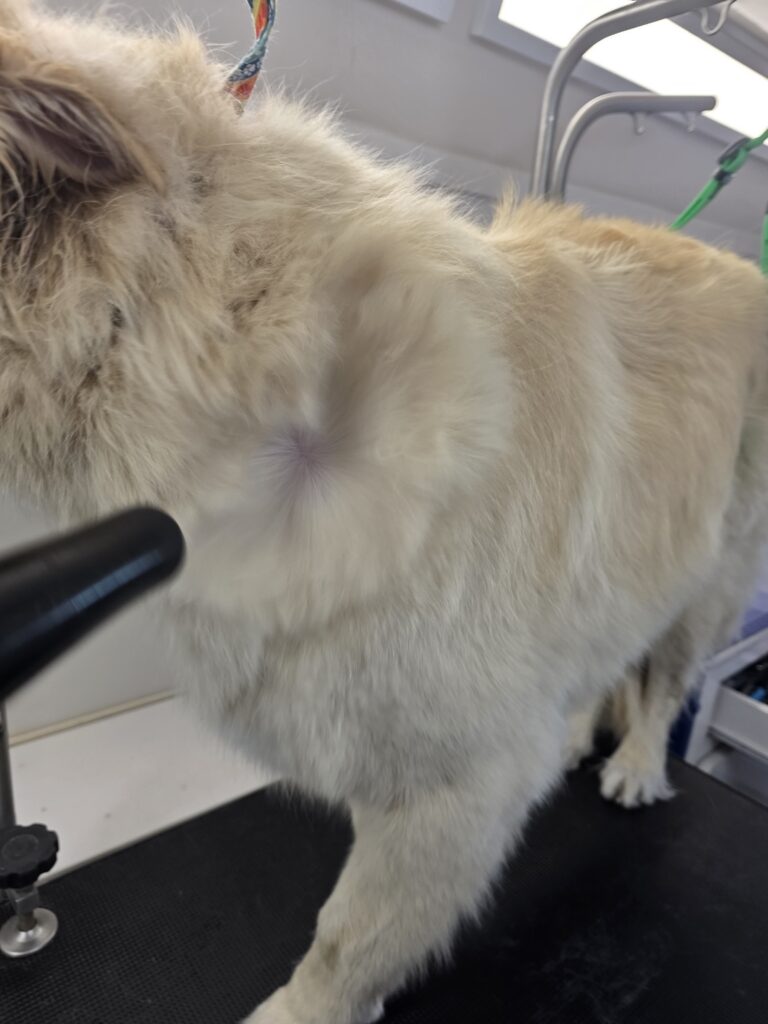
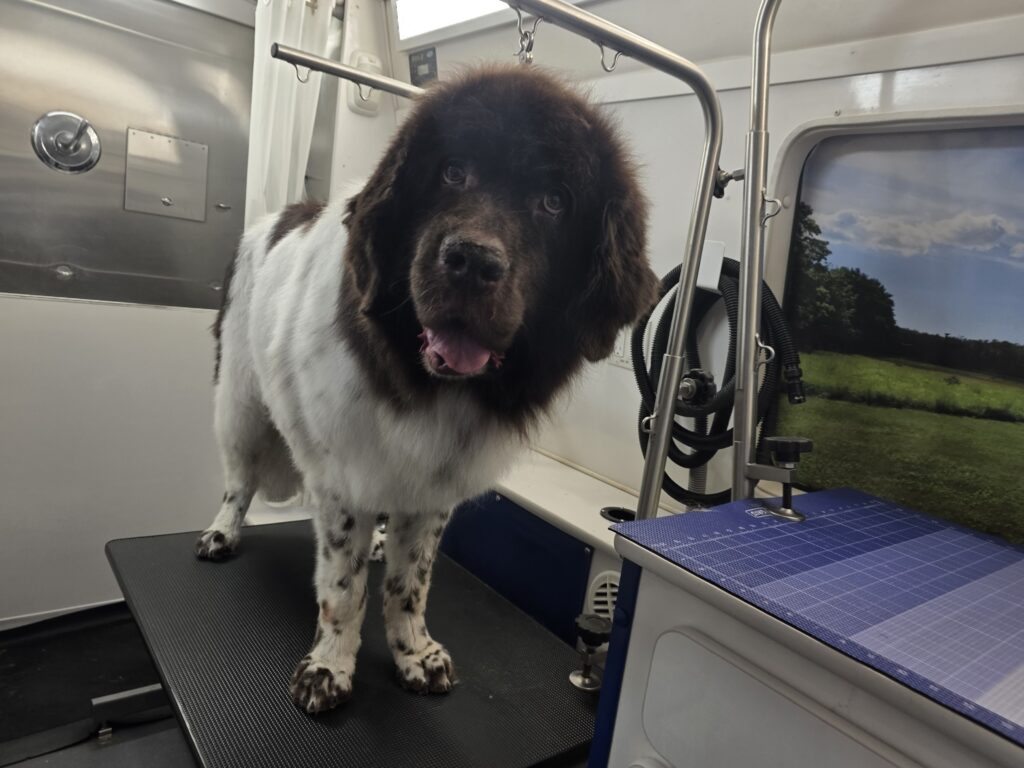
Why I do not routinely shave it
Clipping a double coat cuts the guard hair and undercoat to the same length. Regrowth can be slower, uneven, or different in texture, so I do not recommend shaving a healthy double coat simply for summer.
The normal approach is to remove loose and compacted undercoat through bathing, complete drying, and coat-appropriate deshedding work. A veterinarian-directed coat removal is a different situation.
Keep the schedule regular
A four-to-six-week routine keeps undercoat from accumulating into a dense layer. Longer gaps create more drying and undercoat-removal work and can be harder on the dog.
Heavier shedding periods may produce a dramatic amount of coat, while indoor Phoenix dogs may shed more steadily throughout the year.
Not quite this dense?
If the outer coat is short and the undercoat can be parted to the skin easily, the Short Double-Coated Bath & Brush may be the better fit. A coat that grows continuously and needs a haircut belongs in a Full Groom.
Ready to book?
Add your dog in My Dogs, then choose an available appointment.