By Yvette Ehler, owner and groomer at Green Dog Mobile Grooming. Grooming since 2009.
Before I choose a brush, I decide whether I am clearing tangles or removing loose coat. Brushing and deshedding need different tools and techniques.
Brushing smooths, separates, and clears tangles. Deshedding releases coat that has already loosened and is ready to leave. Which one your dog needs depends entirely on what is growing out of them — and an aggressive tool used on the wrong coat does far more harm than a gentle tool used thoroughly.
So before I pick anything up, I ask what I am actually trying to remove. On a smooth coat, the target is loose surface hair and debris. On a double coat, it is loose undercoat beneath the guard hairs; coat density determines how much depth I need to work through. On a curly coat, the job is not conventional deshedding: detached hairs tend to remain within the surrounding coat, where friction can contribute to tangles and mats.
Those three coats need different techniques. “Brush your dog regularly” is not very useful unless you also know which tool to use and what you are trying to accomplish.
Work through the coat, not across the surface
A brush only helps if it reaches where the problem actually is. On longer and curly coats I line brush: separate a small section, brush from the skin outward, move on, then check with a metal comb. If the comb catches, that section is not finished — however tidy it looks.
This is why surface brushing fools people. A slicker can leave the top layer looking immaculate while tangles sit undisturbed near the skin, especially behind the ears, under collars, in the armpits, and down the legs. The comb is what tells you whether you reached the full depth of the coat. Line brushing is covered step by step in the curly-coat guide and the doodle coat-care guide. It is especially useful on coats where curl, length and density allow tangles to remain concealed beneath an orderly-looking surface.
Double coats: release the undercoat, do not cut the coat away
On a double coat I am releasing undercoat that has already loosened. Bathing and high-velocity drying do a great deal of that before any brush is involved, because water and airflow separate guard hairs and move loose fiber out. What remains gets brushed or carded — rather than attacking a packed dry coat with the most aggressive thing in the drawer.
I do not automatically reach for a cutting-style deshedding tool. Anything that removes hair quickly can also remove healthy coat if it is used too hard or on the wrong dog. I want to understand how a tool works mechanically — pin length, tooth spacing, edge design, working depth, pressure — before it goes anywhere near a coat. The dense double coat guide sets out that whole sequence, including what to look for in a rake and where cutting-style tools cause trouble.
Rubber curries and smooth coats
On many smooth coats, a rubber curry is more appropriate than a long-pin slicker or undercoat rake. Its flexible surface can lift loose hair while conforming to the contours of the body. Some smooth-coated breeds also carry undercoat, so tool depth should be based on the individual coat rather than an assumption that every smooth coat is single-layered.
This is why I would rather teach buying criteria than hand out product lists. The right tool is the one whose design matches your dog’s coat. Once that is satisfied, then durability, washable construction, replaceable parts, and responsibly sourced materials become worth comparing.
Dry first — it makes everything easier
Trying to brush a dense shedding coat before it has been bathed and dried properly means doing much more work on packed undercoat. A complete rinse and a proper high-velocity dry loosen and separate the coat so much of the ready-to-shed undercoat leaves on its own. What is left is controlled, quick, and considerably more comfortable for the dog.
The Dog Drying & Finishing guides cover that stage properly. Bathing, drying, and deshedding are three parts of one process, not three separate chores.
Stop when the tool stops helping
More brushing is not better. Once the loose coat is out and the comb moves cleanly through a section, working that area again just creates friction and irritation. I change tools or stop. I do not keep going in pursuit of more hair.
This matters most on fine, sparse, damaged, or previously clipped coats — the ones least able to spare it. The goal was never the biggest pile of hair on the floor. It is a coat clear of loose fiber and tangles, with the healthy hair still attached to the dog.
A few good tools beat a full drawer
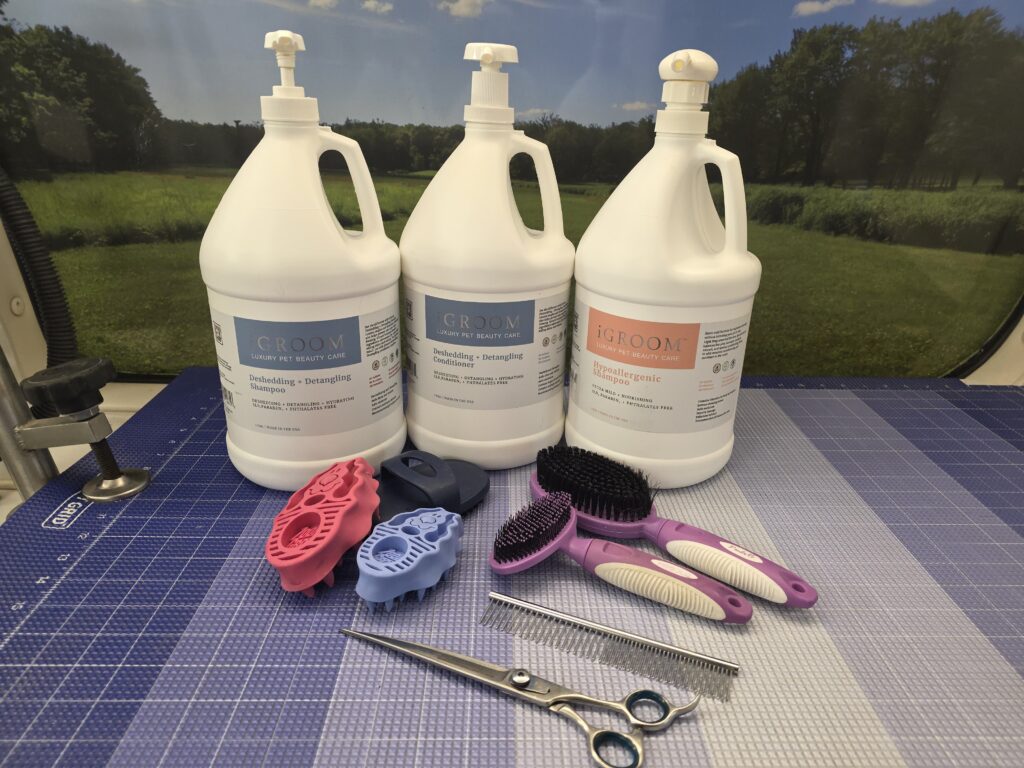
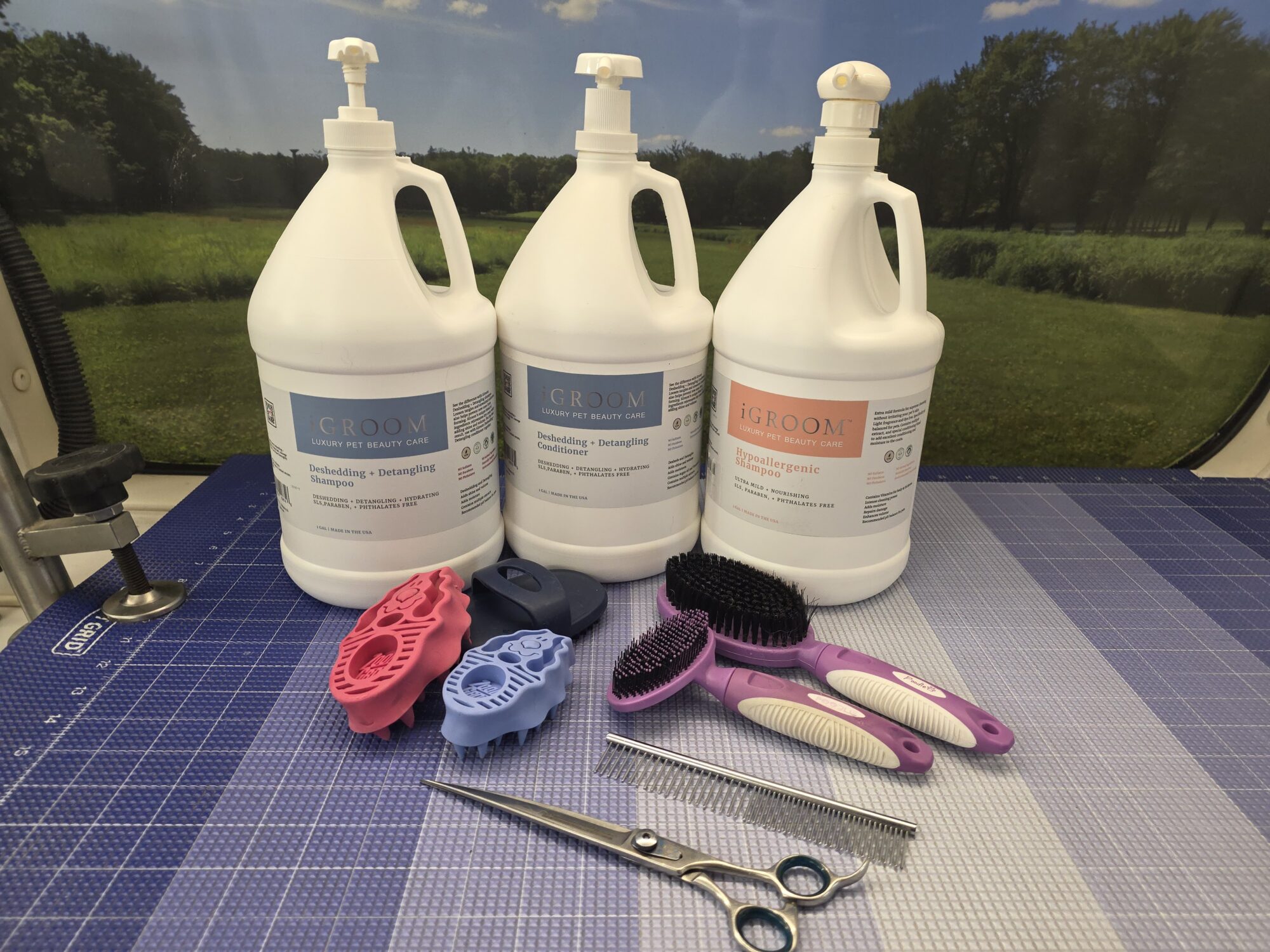
A rubber curry, an appropriate slicker or pin brush, a metal comb, and one coat-specific undercoat tool will cover most home maintenance — provided they match your dog. Handle control, pin length, firmness, spacing, and working depth matter enormously. Packaging claims do not.
Longevity is part of how I judge tools generally. Durable brushes, replaceable components, washable construction, and equipment that can be repaired rather than binned are environmentally preferable when they groom just as well. But I do not call something green because the marketing says so. I look for the feature that can actually be documented.
Make the routine specific to the coat
Telling someone to brush regularly does not help them. Knowing which areas tangle first, how big a section to take, what a finished coat feels like under a comb, and whether their tool reaches their dog’s coat depth — that makes home maintenance repeatable instead of hopeful.
If you are unsure which of these applies to your dog, start with Dog Coat Types & Coat Care. Once you know the coat structure, choosing the brush becomes obvious.