By Yvette Ehler, owner and groomer at Green Dog Mobile Grooming. Grooming since 2009.
A 32:1 dilution means 32 parts water to one part shampoo. Follow the label rather than pouring concentrate straight onto the dog. Too much product can be harder to rinse out.
Some shampoos need mixing; others are ready to use. I check the directions for the exact product instead of assuming they all mix the same way.
How to read the ratio
The first number is water and the second is product. At 32:1 you are adding thirty-two units of water to one unit of shampoo, so one ounce of concentrate makes thirty-three ounces of working solution. At 16:1 one ounce makes seventeen. At 8:1, nine. The higher the first number, the further the bottle goes.
This matters when comparing prices, because the sticker price on a concentrate tells you almost nothing on its own. A sixteen ounce bottle at 32:1 makes about 528 ounces of working shampoo, which is more than four gallons. The same size bottle of ready-to-use product makes sixteen ounces. Those two bottles are not competing on price in any meaningful sense until you have done that arithmetic.
Manufacturers sometimes state the ratio the other way round, or express it as a number of ounces per gallon. Read the label rather than assuming, because a mistake in the wrong direction either wastes an expensive bottle or leaves you washing a dog with water.
Mixing it in practice
The simplest approach is a marked bottle you fill each time. Add the water first, then the concentrate, because doing it the other way produces a bottle of foam that is difficult to fill and difficult to see through. Cap it and invert it gently a few times rather than shaking, which just makes more foam.
Mix what you will use in the next few days rather than making up a large quantity in advance. Diluted product does not have the same preservative concentration as the original and there is no reason to store it for weeks when mixing takes thirty seconds. If a manufacturer publishes guidance on how long their diluted solution keeps, follow that over any general rule.
A dedicated applicator or foamer bottle can improve distribution on a dense coat by carrying diluted product through the guard hairs toward the undercoat and skin. Better distribution helps the surfactant solution contact oily debris and soil more uniformly without relying on a thick ribbon of concentrate worked through the outer coat.
Why dilution makes the coat easier to rinse
Using a concentrate substantially stronger than its labeled dilution can make complete distribution and rinsing more difficult. Residual surfactant or conditioning ingredients may leave the coat feeling tacky or coated and can increase friction between hairs. If a coat feels greasy or tacky soon after a bath, incomplete rinsing or product residue is one possibility to consider.
Diluted product spreads through the coat far more evenly, reaches the skin where the work needs to happen, and comes back out under the rinse. Rinsing is a common place for a home bath to fall short, and using the product at the intended strength is one practical way to make that rinse achievable. The bathing guide covers the rinsing sequence in more detail.
On dense double coats this compounds. Product that never fully reached the skin, and residue that never fully left it, both make deshedding harder afterward, which is why bathing technique shows up in how much undercoat releases during drying.
What a concentrate does and does not tell you
A published dilution ratio is arithmetic you can check. One bottle produces a calculable volume of working solution. Concentration can reduce the amount of product solution and packaging required to provide a given volume of working shampoo, although the actual packaging and shipping comparison depends on container size, materials and distribution.
What a ratio does not do is quantify anything beyond itself. I cannot tell you what a concentrate saves in emissions, manufacturing impact or total waste, because that requires comparative data that is often not publicly available for these products, and I would rather give you the arithmetic than a number I made up. The honest version is that the volume difference is real and measurable, and the broader environmental accounting is not something the ratio alone establishes.
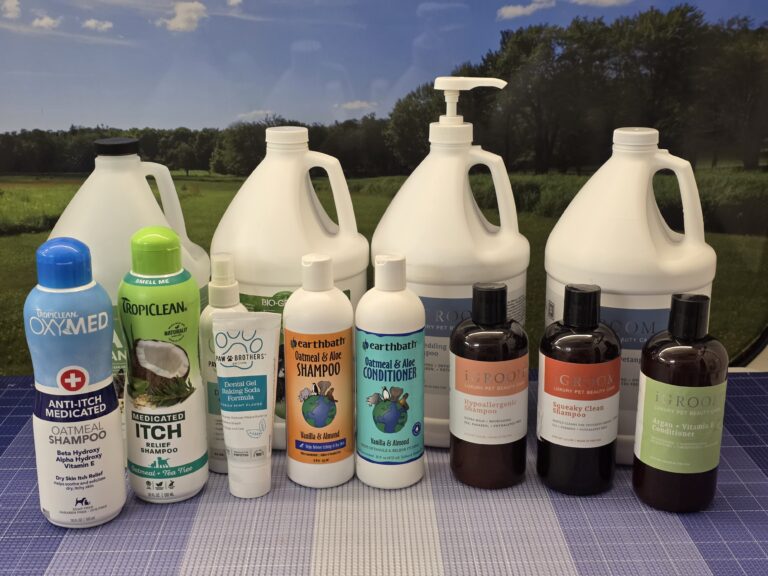
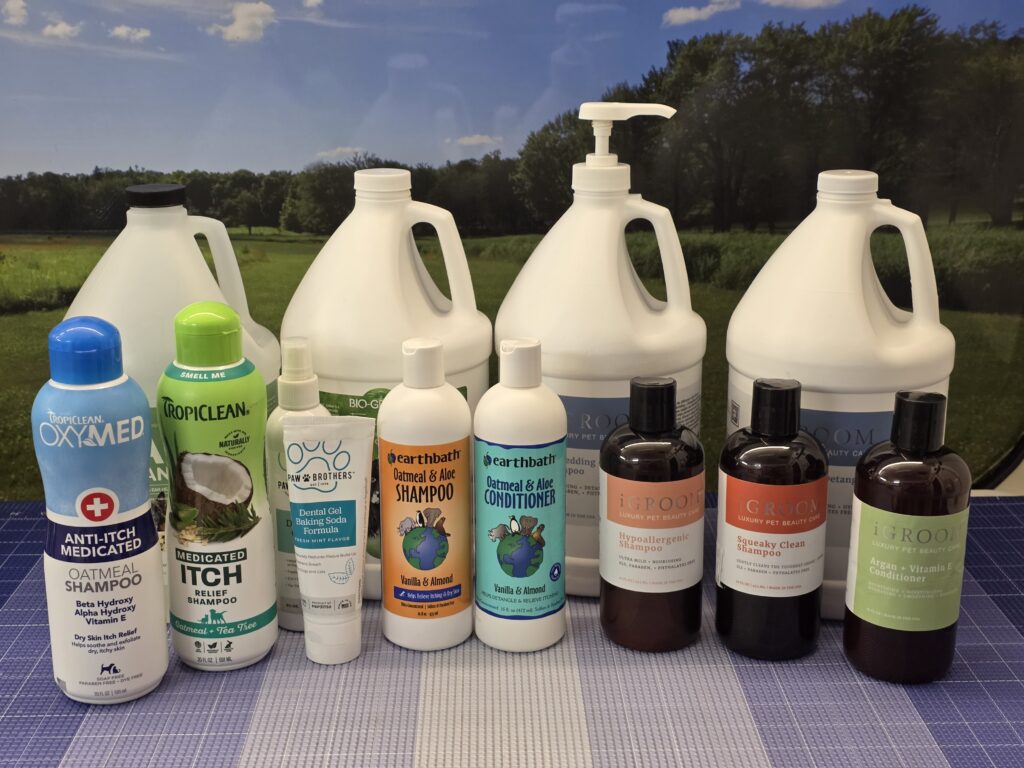
The same discipline applies to what else is on the bottle. If a manufacturer describes a formula as biodegradable or made with naturally derived ingredients, that is their claim about their product, and it belongs to them rather than to me. Claims like that also tend to be scoped to one formula rather than a whole line, so a clarifying shampoo described a particular way does not tell you anything about the conditioner beside it on the shelf.
What to look for when comparing concentrates
Start with whether the manufacturer provides a specific dilution instruction. A stated ratio such as 32:1 gives you a reproducible concentration and lets you calculate working volume and cost per mixed ounce. Directions such as “dilute as needed” provide less precision, so measuring product use consistently is more difficult.
Then look at rinseability, especially for dense or long coats where product can be difficult to remove completely. A concentrate that dilutes cleanly, spreads through a dense coat and rinses out without leaving a coated feel is worth more than one with a higher ratio that fights you at the end.
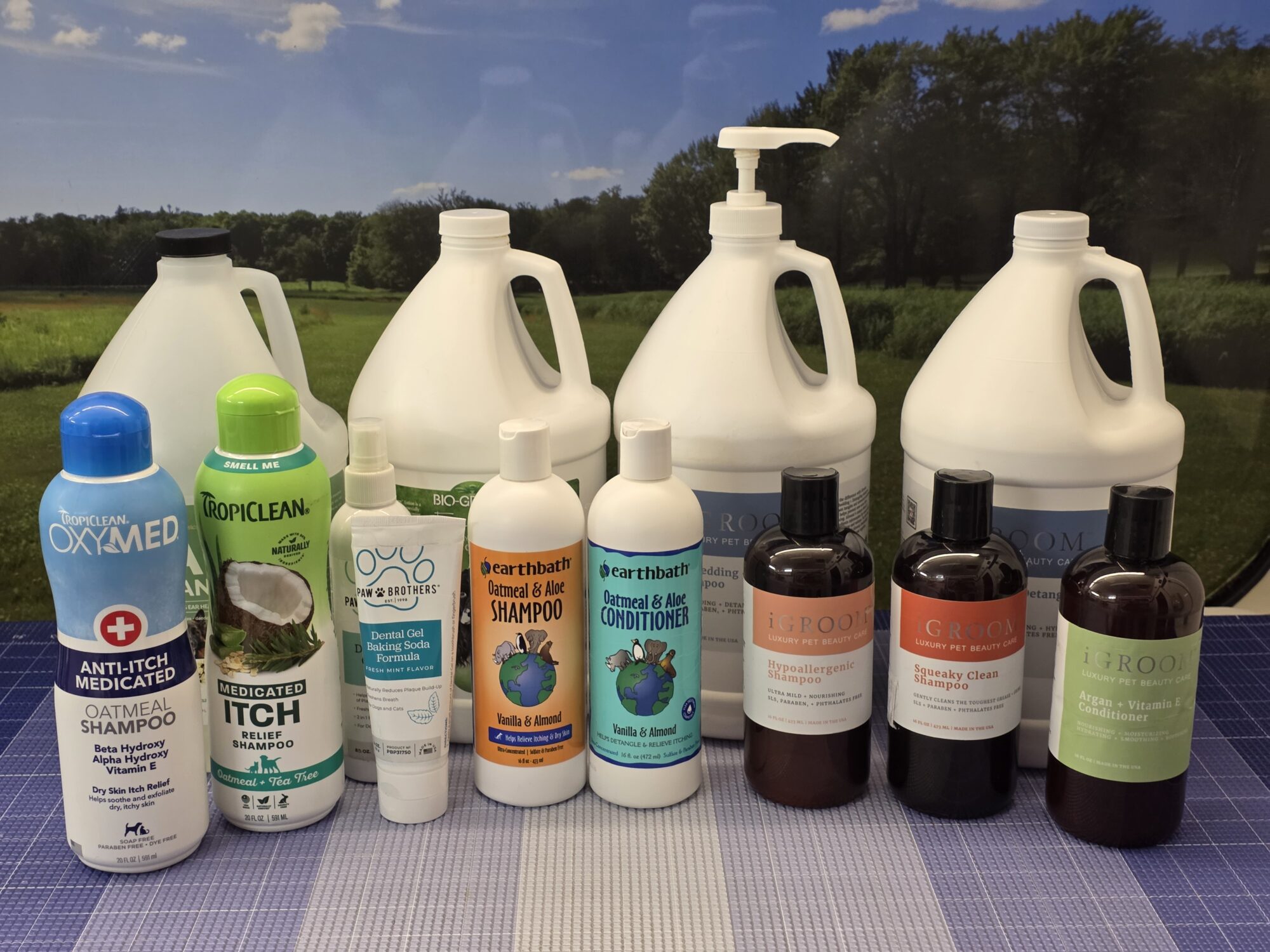
Refill availability is the next thing worth checking. A product sold in a large refill container that decants into a working bottle reduces how much packaging you buy for the same amount of washing, and this is a straightforward practical advantage rather than a marketing one. Where a manufacturer names a genuine certification, look for the certifying body by name, because a real certification such as USDA Organic has a defined scope and a phrase like “eco-friendly” does not.
A note on over-diluting
Over-dilution can also reduce cleaning performance. Surfactants lower surface tension and help suspend sebum, soil and other debris so they can be rinsed away; using less product than the manufacturer specifies may leave too little active formulation for the intended cleaning job. Follow the labeled dilution rather than treating the ratio as a place to economize.
If a coat needs more cleansing than one wash at the correct dilution delivers, the answer is a second wash or a different product rather than a stronger mix. A very dirty or oily coat is a normal reason to wash twice, and that is a better routine than pouring concentrate on and hoping.
For the full bathing sequence, see the guide to bathing a dog properly. If you are trying to work out which product suits your dog’s coat before worrying about ratios, the coat types guide is the place to start, and the dense double coat guide explains why rinsing matters so much more on a thick coat than a thin one.