By Yvette Ehler, owner and groomer at Green Dog Mobile Grooming. Grooming since 2009.
I towel dry before switching on the dryer. Removing that water first can shorten the drying time, especially on a thick coat.
On long, curly, or wavy hair, rubbing can twist the wet hair together and create tangles. Blot and gently squeeze the coat instead.
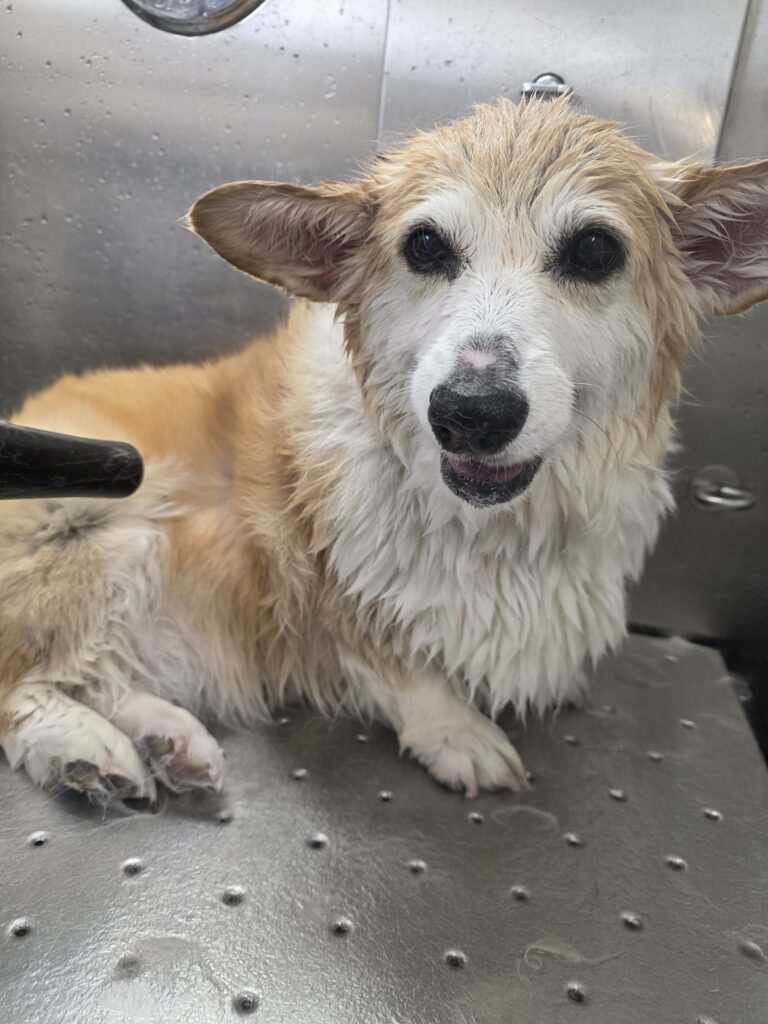
Blot and squeeze rather than rub
On a longer drop, curly or wavy coat, press the towel against a section and squeeze the water out, then move to the next section. You are treating it the way you would wring out a cloth rather than the way you dry your own hair. It takes slightly longer and may save time later at the comb.
Shorter hair is less likely to twist together during towel drying. I still work gently, but longer coats need more blotting and less rubbing.
Work from the top down and pay attention to the areas that hold water — the chest, the belly, the armpits, the trousers on the back legs and under the tail. Those stay damp long after the back feels done, and a coat that is dry on top and wet underneath will mat and can hold odor.
Microfiber, and why it works
Microfiber towels are made from very fine synthetic filaments, commonly polyester and polyamide. Their high surface area and capillary action allow them to absorb and retain substantial water relative to their weight. In practice, a smaller microfiber towel can often be wrung out and reused during the same groom.
They also dry quickly between uses, which matters more than it sounds when you are washing a dog every few weeks and would rather not have damp towels sitting in a basket. The trade-off is that microfiber can feel grabby against a long coat, so blotting rather than rubbing matters more with these than with cotton.
Look at weight, usually given in grams per square meter. Heavier means more absorbent and slower to dry; lighter is faster to wring and quicker to dry between uses. For a large dense dog, one heavy towel plus one lighter one covers most situations better than two of the same.
Chamois-style towels
Synthetic chamois towels work differently. They are a thin, dense sheet that sheets water off rather than absorbing it into a pile, and they are wrung out constantly during use. On a short or smooth coat they are extremely efficient, and they take up almost no space.
On a long or curly coat they are less pleasant, because the flat surface drags. They also need to be stored damp or re-wetted before use according to most manufacturers’ instructions, since they stiffen when they dry out completely, so they are a slightly higher-maintenance item than a towel you throw in the wash.
Ordinary cotton towels
There is nothing wrong with cotton, and if you already own towels you do not need to buy anything to bathe your dog. Cotton absorbs well, is comfortable against the coat and skin, and many cotton towels tolerate repeated washing well.
The drawbacks are bulk and drying time. Cotton holds a lot of water but becomes saturated quickly and cannot be wrung out to anything like a usable state, so a big dog takes several towels. If you are buying rather than repurposing, terry cotton with a reasonable pile does the job, and dedicating a few old bath towels to the dog is a low-cost way to reuse what you already own.
Reusable towels are practical for repeated grooming
Washable grooming towels can be reused many times and avoid relying on disposable wipes or pads for routine drying. Durability matters here: a well-made towel that continues to absorb after repeated washing can stay useful for a long time.
I reuse washable towels and follow their care instructions so they last.
Where a manufacturer names a genuine certification, such as OEKO-TEX for textiles, that has a defined scope and a body standing behind it. Words like eco-friendly and natural on a towel label do not, and a towel described as sustainable without any specific claim attached is telling you nothing you can check. Where a fiber content is stated, that is a fact; where an environmental conclusion is drawn from it, that is the manufacturer’s claim rather than a finding.
Washing towels so they keep working
Skip fabric softener. It coats fibers and reduces absorbency, which is precisely the property you bought the towel for, and it affects microfiber worst of all. Wash dog towels separately from clothing, since hair transfers readily and microfiber in particular holds onto it.
Wash microfiber with other microfiber where you can, at a moderate temperature, and let it dry rather than putting it on high heat, since heat can damage the fine fibers over time. Follow the manufacturer’s care instructions where they differ from this, because construction varies.
A hair trap in the machine or a rinse of the drum afterward saves trouble, and shaking towels out over a bin before they go in removes a surprising amount of the hair that would otherwise end up in your plumbing.
How many you actually need
For a small dog, two good towels. For a large dense dog, three or four, with at least one heavy absorbent one for the initial water and a lighter one for finishing. Beyond that you are buying storage problems rather than capability.
The drying guide covers what happens after the towels, and the dryer buying guide deals with the machine itself, including the washable filters that keep it working. For the bath that comes first, see the bathing guide.