By Yvette Ehler, owner and groomer at Green Dog Mobile Grooming. Grooming since 2009.
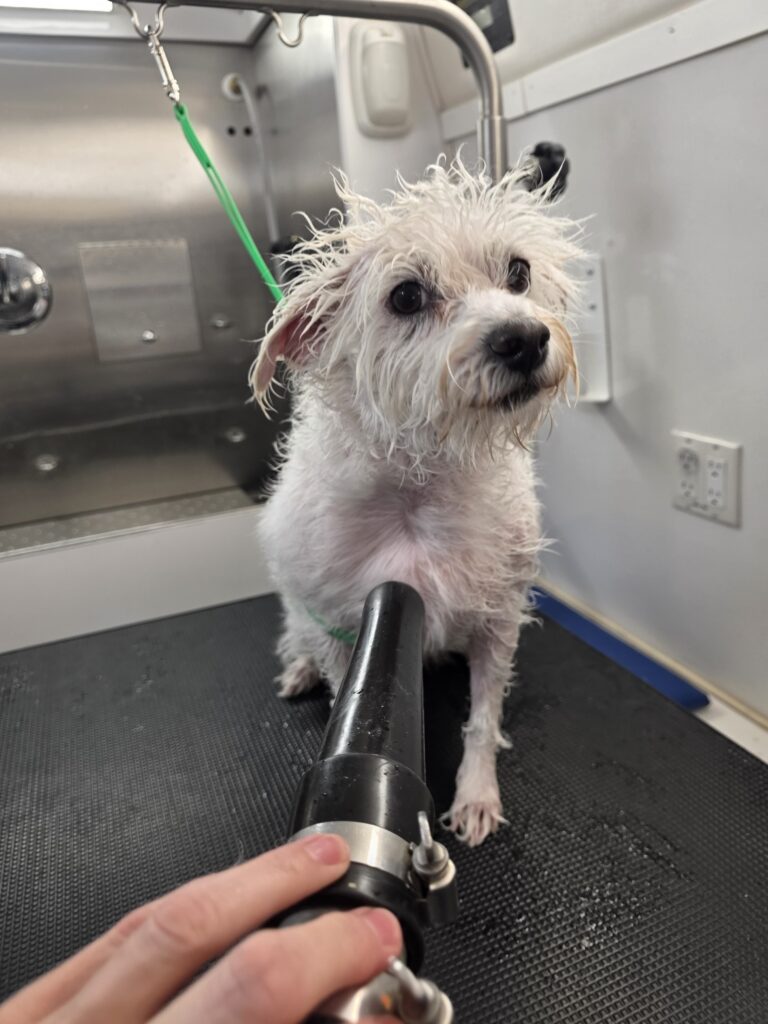
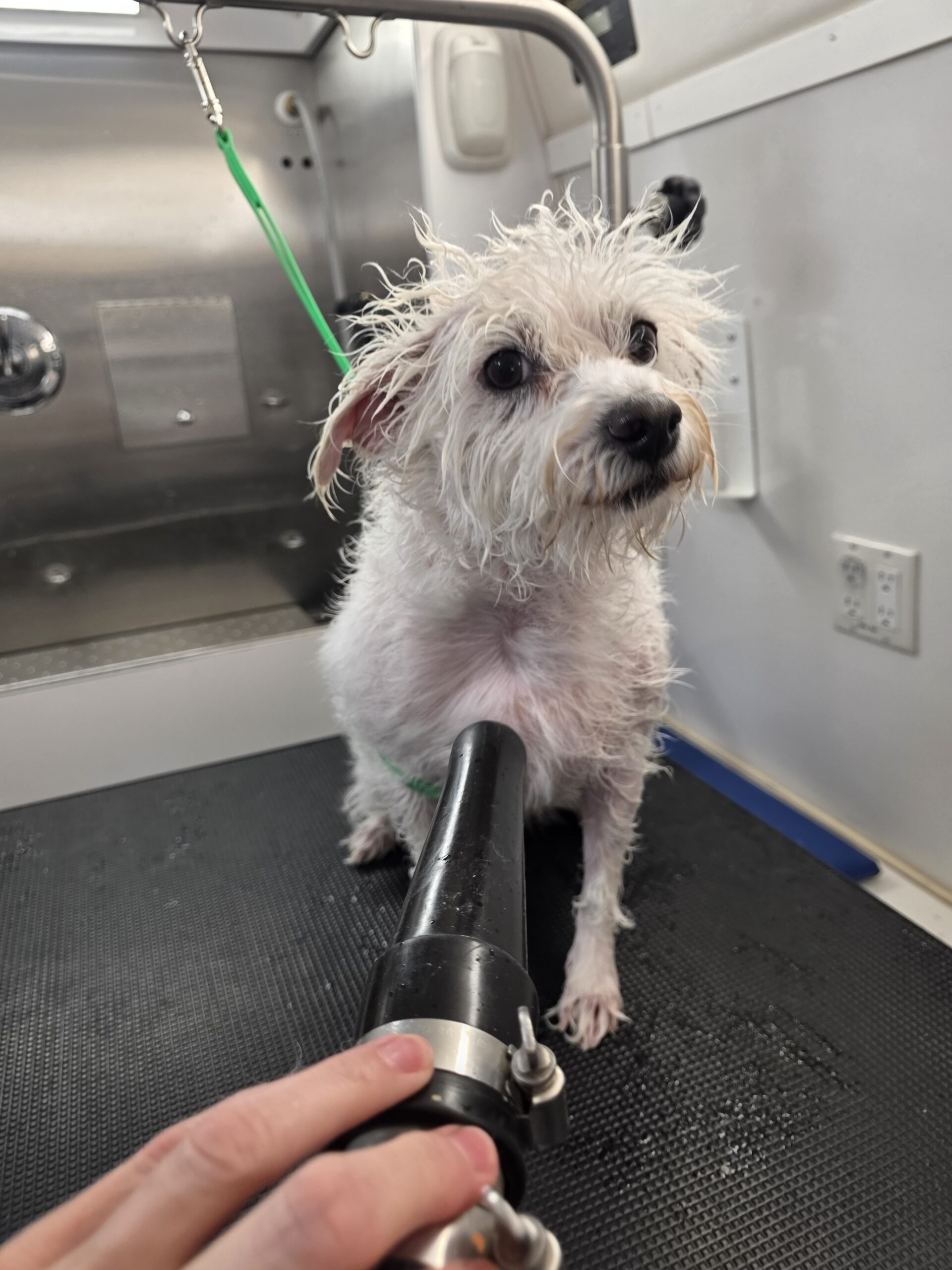
A high-velocity dog dryer pushes water out of the coat with moving air. I look for airflow and control rather than extra heat. It works differently from a human hair dryer.
A high-velocity dryer can be one of the more expensive pieces of home grooming equipment, so the specifications are worth comparing carefully. Wattage figures get quoted because they are easy to print, but wattage tells you what the motor draws rather than what it delivers. What you actually want to compare is airflow, how the nozzle concentrates it, whether the speed can be turned down, and whether the machine can be maintained rather than replaced.
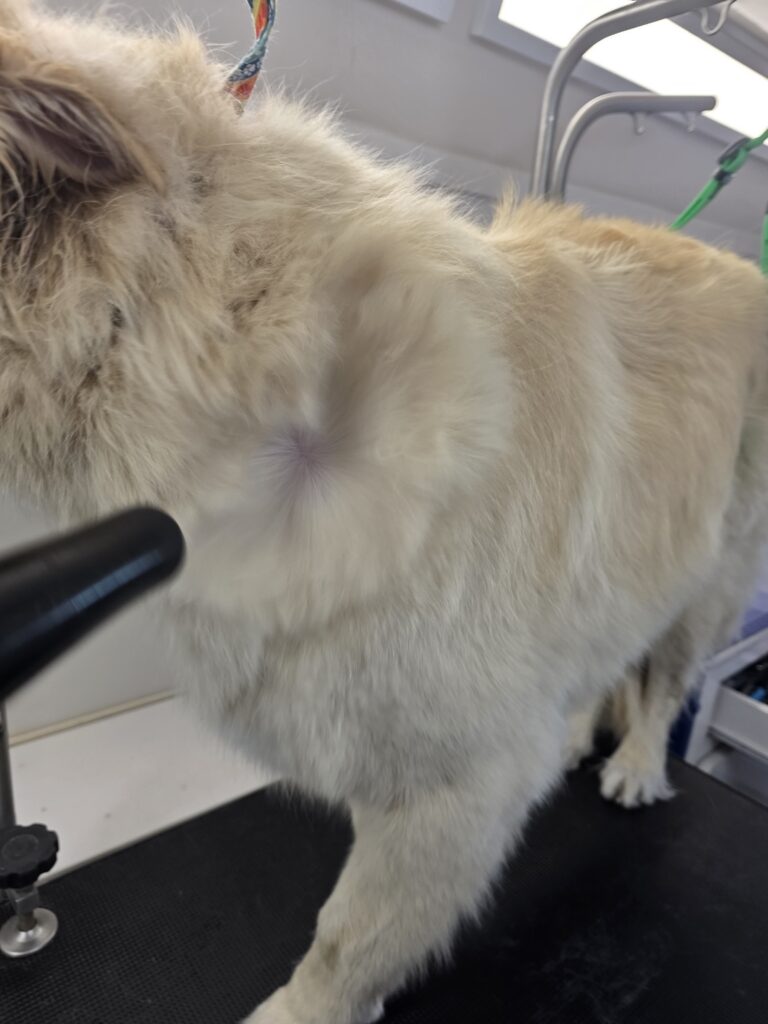
Airflow does the primary drying work
Many high-velocity dryers are unheated by design, producing only the modest warmth the motor generates in normal use. That is deliberate. The separation of the coat comes from moving air. Additional heat needs careful management and is not the primary feature to prioritize, so compare airflow and control before temperature range.
Airflow is typically published as cubic feet per minute, and it is the figure worth comparing across models. Treat manufacturers’ numbers as their own claims and compare like with like, because measurement points vary and a figure taken at the motor is not the same as one taken at the nozzle. Published measurement conditions make the airflow figure easier to evaluate and compare.
Nozzle design matters as much as raw volume. A narrow cone concentrates the air for working down through a dense coat, while a wider one covers surface area faster and suits fine or short coats. Most machines ship with a small set, and having the right one for the coat can change how long the job takes.
Variable speed is worth more than maximum power
Full force may suit the body coat on a large dense dog but is too strong for a face, ears, a small dog or a nervous one. A dryer with a single speed limits where you can use it and may leave you finishing sensitive areas with towels or another lower-airflow method.
Variable speed is also what makes the machine usable with a dog who is still learning to accept it. Starting low and building gradually is much easier with adjustable airflow. When choosing between maximum airflow and useful control, the adjustable machine is generally more versatile across dogs and body areas.
Do you need a single- or dual-motor dog dryer?
Two-motor dryers move more air and generally cost more, weigh more and are louder. For one dog at home, a good single-motor machine is usually sufficient, and the extra motor earns its place mainly on very large, very dense coats or when you are drying several dogs in a day.
With a two-motor machine, it is worth checking whether each motor can be serviced or replaced individually.
Air intake and filtration affect performance
Hair can clog the intake filter, reduce airflow, and make the motor run hotter. Choose a dryer with a filter that’s easy to reach and clean.
What you want is a filter you can reach easily and wash rather than one you have to buy repeatedly. Washable foam or mesh filters that come out without tools, dry overnight and go back in are the practical standard, and they avoid a stream of disposable replacements over the life of the machine. Where a manufacturer sells only proprietary consumable filters, that is a running cost worth adding to the purchase price before deciding anything is cheap.
Check and clean the filter regularly according to the manufacturer’s instructions. Restricted airflow makes the motor work harder and can shorten the life of the machine.
Can a dog dryer be repaired?
Given what these cost, serviceability is worth more than a marginally higher airflow figure. Before buying, look for whether the manufacturer sells spare parts at all, and specifically whether hoses, nozzles, filters, switches and brushes or motors are available separately. Hoses are wear items, so being able to buy a replacement separately can keep a good dryer in service much longer.
The same applies to the warranty terms and to whether there is any repair route beyond replacement. A dryer that can be repaired instead of replaced when one component fails can reduce both long-term cost and equipment waste. Parts availability is something you can verify before buying.
How much do dog-dryer noise, hose length and weight matter?
These machines are loud, and the quieter end of the range is easier to work with, particularly for a dog who finds the noise difficult. Manufacturers publish decibel figures; treat them as claims made under their own test conditions rather than as directly comparable across brands.
Hose length decides whether you can put the motor unit on the floor and still reach a dog on a table, and a short hose forces you to move the whole machine constantly. Weight matters if you will carry it. A dryer that is awkward to set up may be used less often, so handling and storage deserve attention alongside airflow.
Using it safely
Keep the nozzle moving rather than holding it in one spot, follow the manufacturer’s guidance on run time and temperature, and never direct the airflow into a dog’s face, ears or genitals. If the machine has a heat setting, check it against your own skin regularly rather than trusting the dial.
Never leave a dog unattended with any dryer running. That applies to cage and kennel dryers in particular, which is why supervision and manufacturer instructions matter more with those than with a handheld high-velocity unit you are operating directly.
For the technique itself, the drying guide covers sequence, coat separation and how to tell a dense area is dry. If your dog finds the noise difficult, the guide to introducing a dryer deals with that directly. On a shedding coat, the dense double coat guide explains why this machine does most of the deshedding rather than the brush.