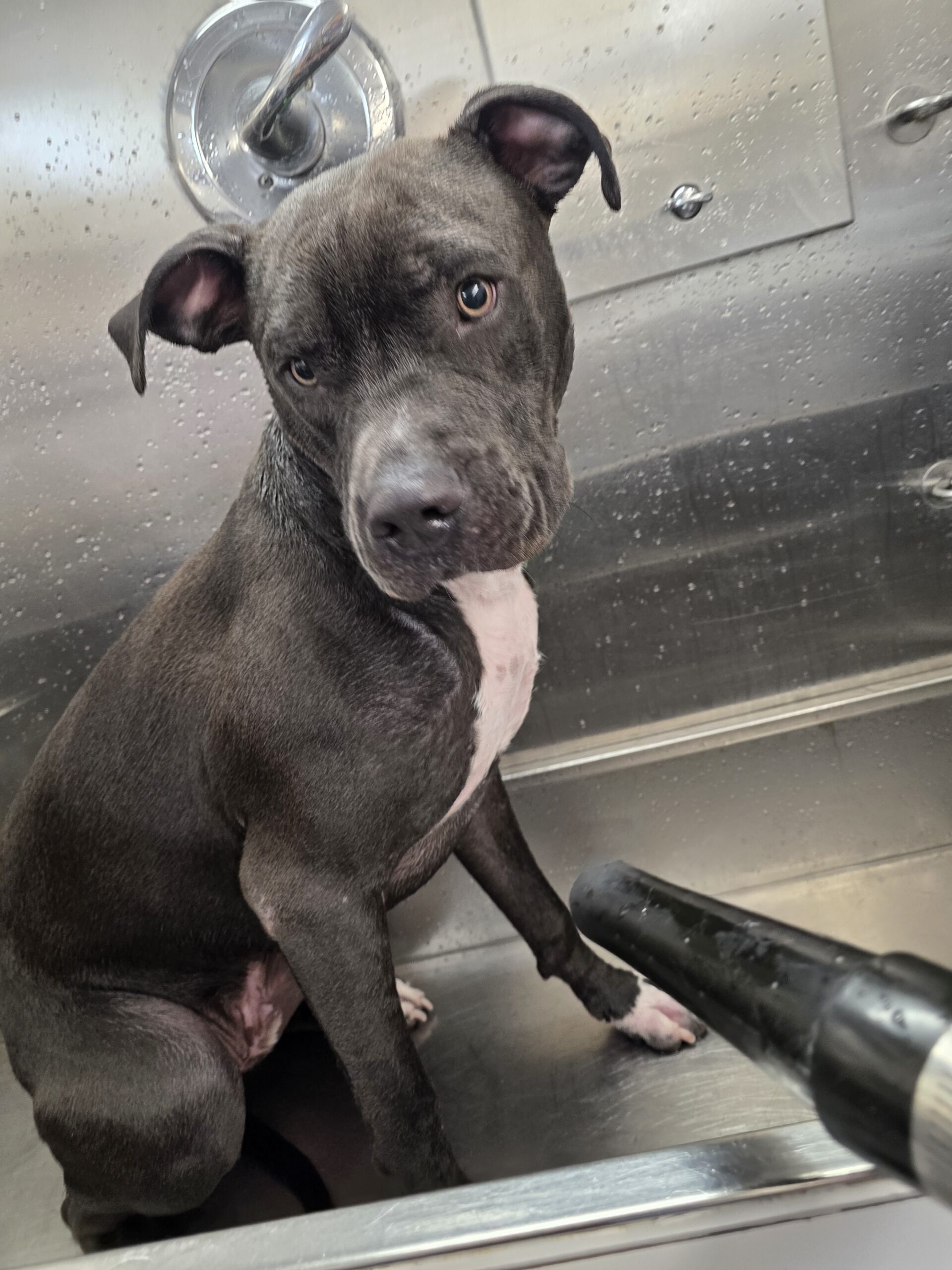
By Yvette Ehler, owner and groomer at Green Dog Mobile Grooming. Grooming since 2009.
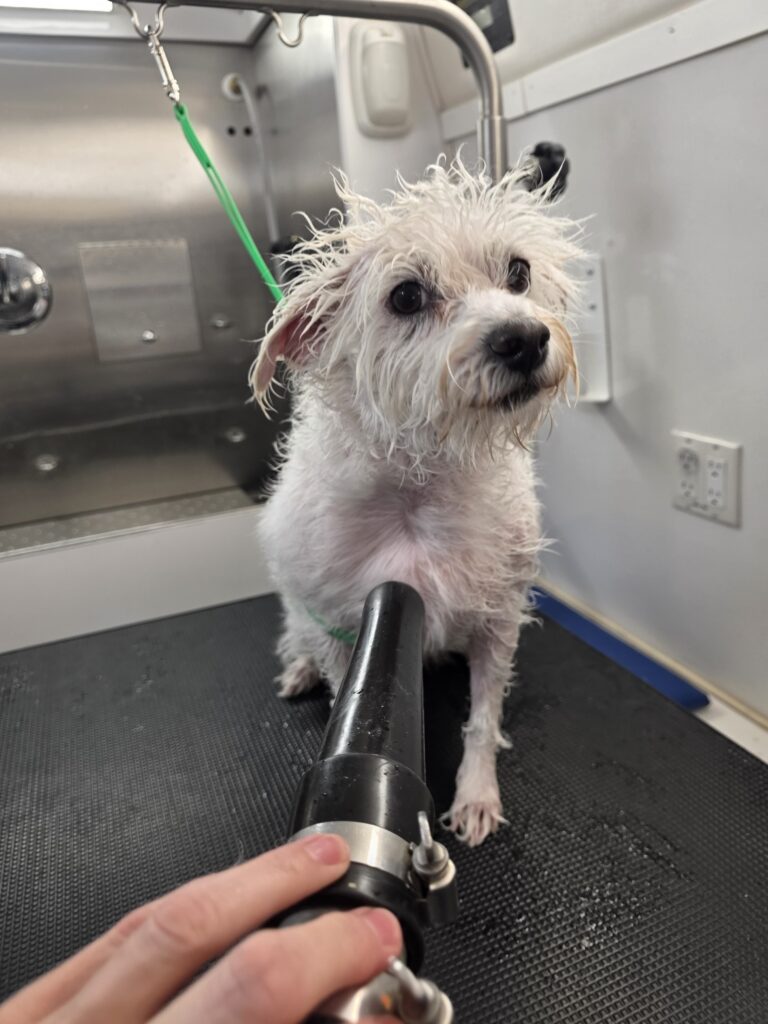
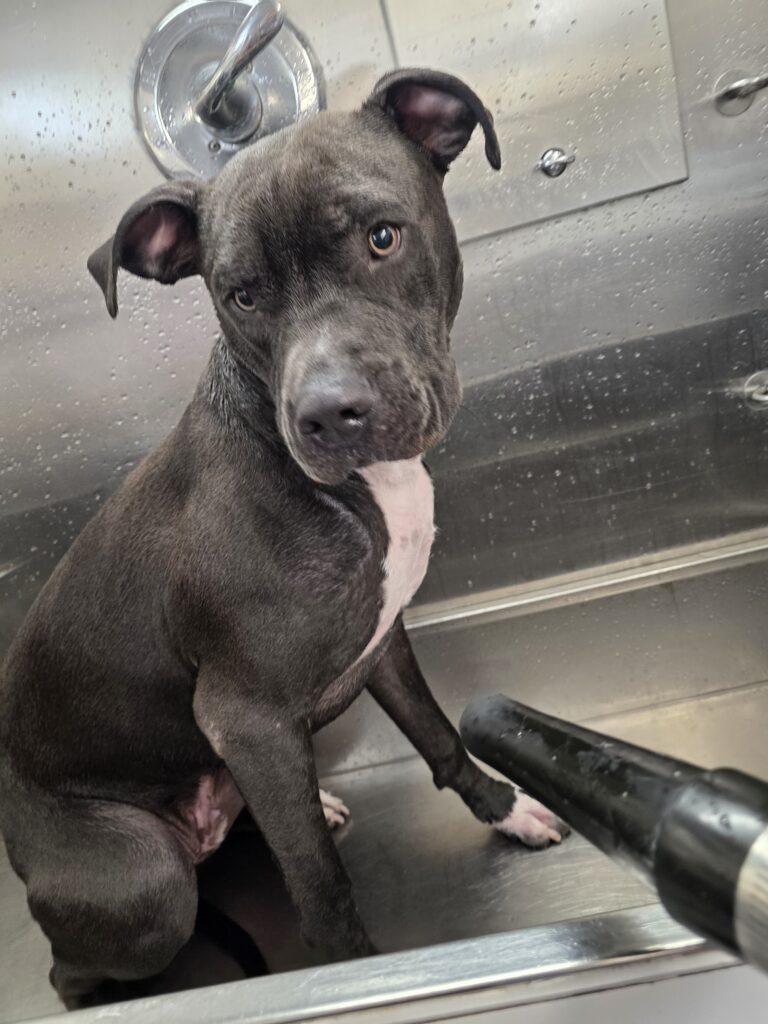
If your dog is frightened by the dryer, I slow down before trying to finish the coat. The noise, moving air, or being held still can each be the problem. A difficult first session can make the next one harder, so introduce it in small steps and stop before your dog becomes overwhelmed.
Dogs may object to the noise, the sensation of forced air on the skin, the restraint, or a combination of those things. Separating those elements makes it easier to see which part needs a slower introduction.
Separate the noise from the air
Start with the machine on the floor, running at its lowest setting, pointed well away from the dog, in a room the dog can move around in. Do not dry anything. Let the dog spend a short period near the running dryer while receiving food, a chew, or ordinary attention, and then turn it off. That is the whole session, and it might last two minutes.
Repeat short exposures until the dog can remain relaxed around the sound. Look at body language rather than simply whether the dog stays in place: persistent vigilance, attempts to increase distance, a tucked posture, trembling, or repeated escape behavior indicate that the exposure is still too difficult and should be reduced.
Once the dog can remain comfortable around the sound, introduce the airflow on an easier area such as the shoulder or hip. Use a brief burst of low air, stop, and reward the dog. Avoid starting with the face, feet, tail, or prolonged airflow.
Build up in small pieces
From there it is a matter of extending duration and coverage gradually, ending while the dog is still comfortable whenever possible. Short, manageable sessions give you a better starting point for the next attempt than waiting until the dog struggles.
Work on a dry dog at first. Practicing on a dry coat removes the pressure of having to finish drying a wet dog. The dog can become familiar with the machine before you need it after a bath.
Variable speed matters enormously here, which is worth knowing before buying rather than after. A dryer with one setting gives you nothing to build up from, and you are stuck introducing full force as step one. The dryer buying guide covers what to look for, and adjustable airflow is near the top of it.
Common sensitive areas
Faces, ears, feet and the genital area are common sensitive areas. Never direct high-velocity air into a dog’s face or ears. Turn the speed right down for the head, work from behind the ear forward rather than into it, or dry the head with a towel and a low setting and accept that.
Feet are the other common sticking point, and it is usually the sensation between the toes rather than the noise. Holding the foot steadily rather than letting it move in the airflow helps, and so does approaching from the side rather than blasting straight at the pad.
If a dog is frightened rather than merely unsure, go back to an easier step rather than pushing through a full dry. Forcing the session can make the dryer harder to introduce the next time.
Set the room up so it is easier
Non-slip footing is important. A dog sliding on a wet floor or smooth table may already be bracing against the surface before the dryer is introduced, so use a secure rubber or non-slip mat.
Position the motor unit so the hose reaches without you dragging the machine around mid-session, and keep the dog away from the unit itself where the noise is loudest. If a second person can deliver small food rewards while you handle the dryer, the association between controlled dryer exposure and reinforcement can be easier to establish during the early sessions.
Ear protection made for dogs exists and suits some dogs well, though putting it on is its own training exercise. It is worth trying if noise is clearly the main objection, and worth abandoning if the snood bothers the dog more than the sound did.
Quieter machines and what the figures mean
Noise output varies substantially between models, and the quieter end of the range helps with a sound-sensitive dog. Manufacturers publish decibel figures, and those are their own measurements taken under their own conditions, so treat them as a rough guide rather than as directly comparable between brands.
Hose length has a real effect on perceived noise too, since a longer hose lets you keep the motor unit further from the dog’s head. That is a cheaper route to a quieter experience than buying a different machine.
Why it is worth persisting
A dog who accepts the dryer gets dried to the skin, and a dog dried to the skin has a coat that combs, sheds properly and does not stay damp underneath. On a dense coat the dryer is doing most of the deshedding rather than the brush, so a dog who will not tolerate it ends up with more coat retained and more work at every stage afterward.
That acclimation can also make future grooming appointments easier, because the dryer is already a familiar part of the process.
For the drying itself, see the drying guide, and for taking as much water out as possible before the machine comes on, the towel guide covers what actually works. On a shedding coat, the dense double coat guide explains why this step matters more than the brushing that follows it.