By Yvette Ehler, owner and groomer at Green Dog Mobile Grooming. Grooming since 2009.
When I compare dog clippers, I start with the blade system, maintenance, and replacement parts rather than the brand name alone. Andis, Oster, and Wahl sell professional detachable-blade models, and many use A5-style blades. Check that the blade fits your exact model. On compatible blades, the numbers describe the cutting length.
Replacement blades are part of the cost. A good set can outlast the clipper itself, and individual blades can often be sharpened or replaced.
Detachable blade or adjustable
Detachable-blade clippers take a separate blade for each length, snapping on and off. The professional Andis AG and AGC series, the Oster A5 and Golden A5, and the Wahl KM range all use detachable blades, a system widely used in professional grooming. You buy the clipper once and add blades as you need lengths.
Adjustable-blade clippers use one blade with a lever that shifts between a few close lengths, and reach longer lengths with plastic guide combs. Wahl and Andis both sell popular home kits built this way, and for an owner keeping one dog at a practical short length they are perfectly reasonable. The limitation is that the lever range is narrow and the plastic combs are less precise than a metal guard comb over a detachable blade.
If your dog has a curly or drop coat that you intend to clip regularly, a detachable-blade system gives you more blade-length options and makes individual blades replaceable. If you want to tidy feet and sanitary areas between professional appointments, an adjustable kit or a small trimmer is enough.
Corded or cordless
Corded clippers avoid battery replacement and can run as long as their duty cycle and temperature allow, which is a practical advantage and the reason the Oster A5 has been in salons for decades. The cord is the price you pay, and on a dog who moves around it is a real nuisance.
Cordless clippers are now widely available, and lithium-ion batteries provide practical runtimes for home grooming. Wahl publishes a two-hour runtime for its Lithium-Ion Pro Series cordless pet clipper, which is more than enough for a home groom. Heiniger takes a different approach on the Opal, selling it with two batteries so one charges while the other runs.
Before buying a cordless clipper, check whether its battery can be replaced when its capacity eventually declines. A removable battery pack can extend the useful life of a cordless clipper because the battery can be replaced without replacing the entire tool. A sealed internal battery may make repair or battery replacement more difficult. Replacement batteries for Wahl cordless clippers are widely available from third-party sellers, though buying outside the manufacturer’s own parts is a decision about warranty and quality as well as price.
Why replaceable blades matter
Replaceable, sharpenable blades are a practical durability advantage. Many detachable-blade models from Andis, Oster and Wahl use A5-style blades, although compatibility should be confirmed for the specific clipper. Compatible steel blades can often be sharpened instead of replaced, and mail-in sharpening services may extend their useful life.
Ceramic-edged blades are sold as an alternative, and manufacturers describe them as staying sharp longer and running cooler than steel. Treat those as the manufacturer’s claims rather than settled fact, and note that ceramic still needs the same oiling and can chip if dropped in a way steel does not.
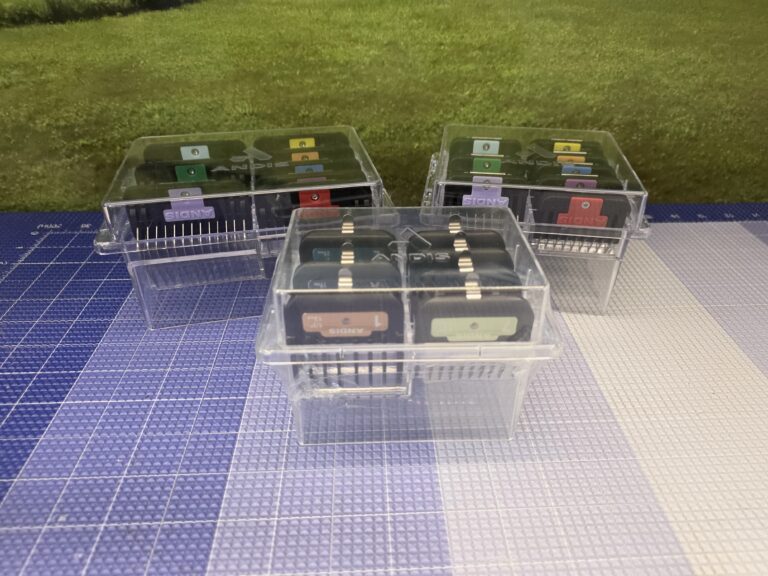
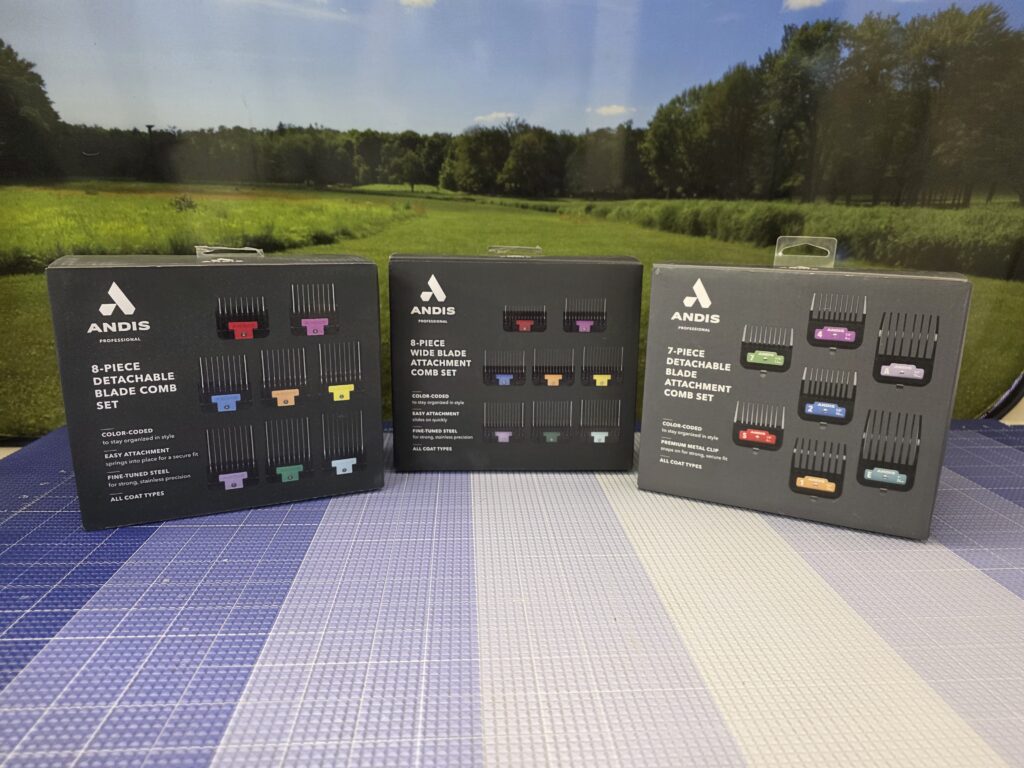
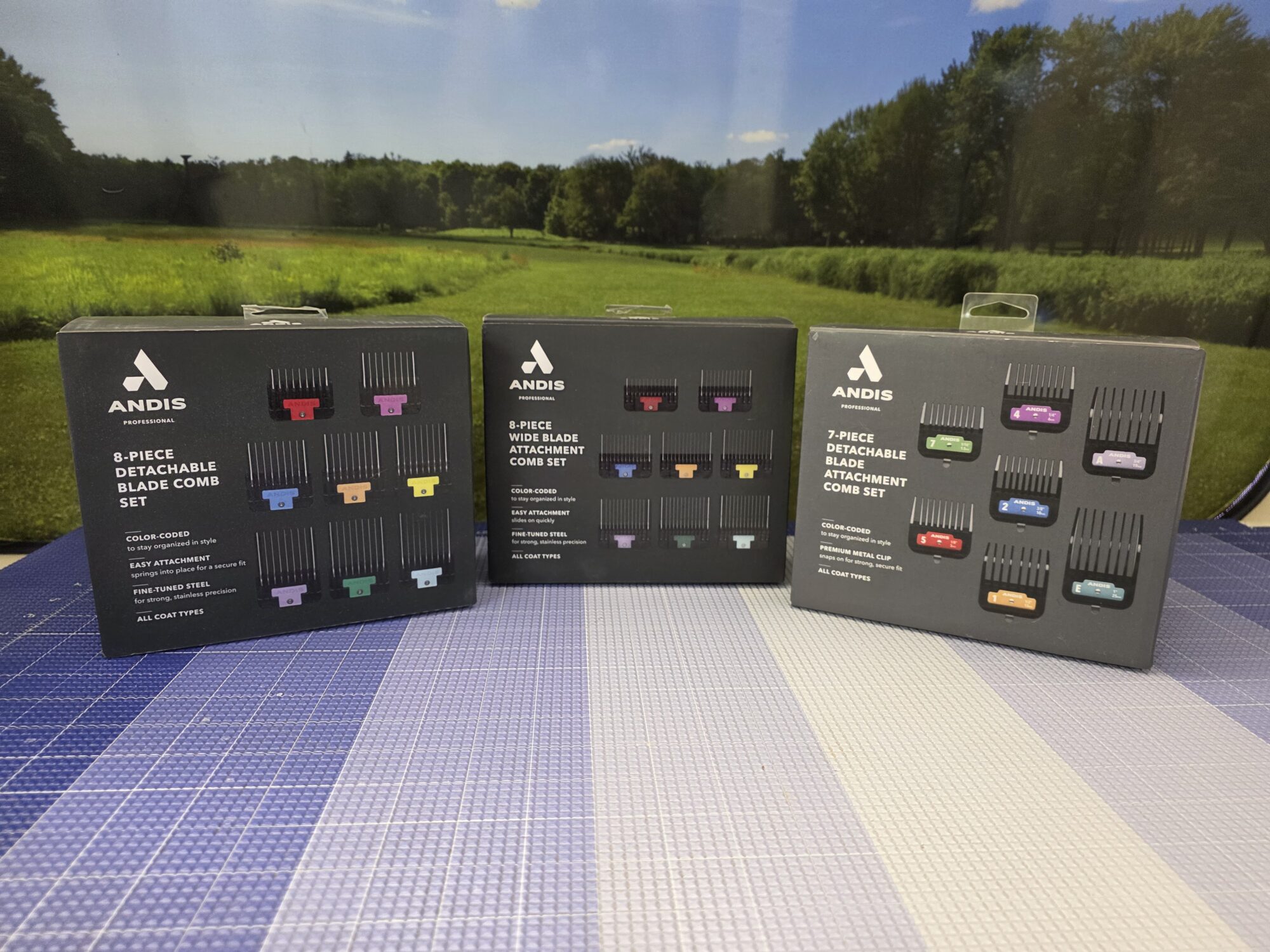
A beginner usually does not need a large blade set. A #10 for sanitary work and a #7F or a guard comb set for the body covers most home grooming, and you add lengths as you discover you need them rather than buying a boxed set where half the blades never come out of the case.
Motor, speed and heat
Single-speed clippers have fewer speed-control components and are straightforward to operate. Two-speed and variable models give you a slower setting for delicate areas and a faster one for covering a body coat, and the slower setting also generates less heat, which matters more than most buyers realize.
Clipper blades heat up during use, so blade temperature needs to be checked throughout the groom. Check the blade against your own skin frequently, rotate between two blades of the same size if you have them, and follow the manufacturer’s cooling guidance. A blade that becomes too hot can burn the skin, so checking blade temperature frequently is an important part of clipping safely.
Noise and vibration also matter, particularly for a dog that is sensitive to clipping. A quieter, lower-vibration clipper may be easier for that dog to tolerate than a faster but noisier model.
What to check before buying
Whether the clipper takes A5 detachable blades, because that decides whether your blade investment is portable to your next clipper. Whether the battery is user-replaceable if it is cordless. Whether the manufacturer sells spare parts at all, and specifically drive assemblies, blade drive levers and switches, which are the components that wear.
Andis, Oster and Wahl have established professional clipper lines with replacement parts and service support. Before buying any clipper, check whether common wear parts and repair options are available; lack of parts can turn a minor component failure into replacement of the entire tool.
For me, serviceability is one of the most useful environmental considerations in this category. Clippers that can be maintained and repaired can stay in service longer instead of being replaced because one component wears out.
Maintenance is most of the lifespan
Clean hair out of the blade after every use, oil the blade across the teeth and at the socket, and run the clipper briefly to distribute it. Blade wash and coolant sprays exist and are useful mid-groom, but oil is the thing that actually prevents wear.
Hair and product build up inside the clipper body around the drive as well. Follow the manufacturer’s cleaning guidance, and if a clipper starts running hot or sounding labored, that is usually maintenance rather than failure.
The clippers and haircuts guide covers preparation, blade lengths and why the coat’s condition decides what you can achieve. For the coat work that has to happen before a clipper is useful, see the curly coat guide or the doodle brushing guide, and for the kit as a whole the home grooming tools guide.