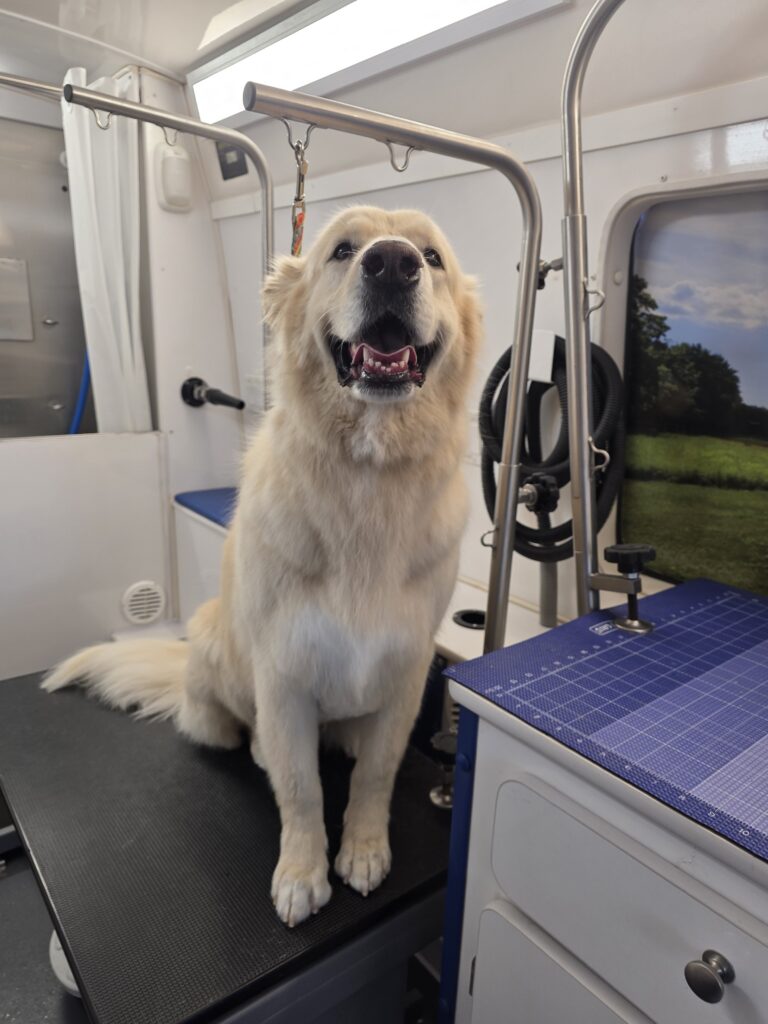
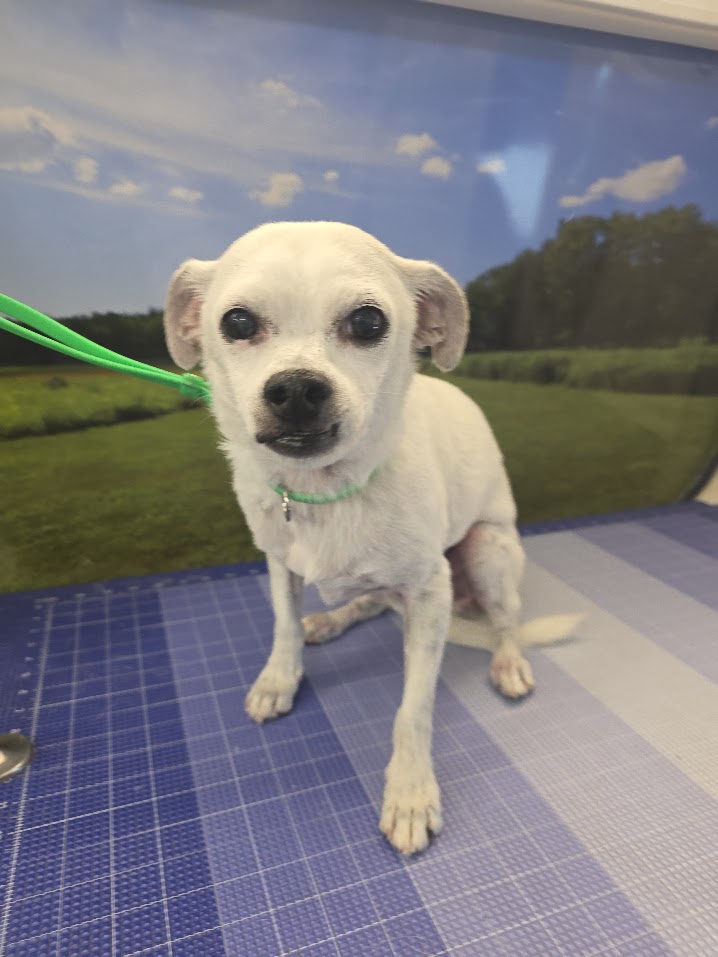
By Yvette Ehler, owner and groomer at Green Dog Mobile Grooming. Grooming since 2009.
A breed name gives me a starting point, but I groom the coat in front of me.
Thickness, texture, undercoat, age, coat condition, and previous grooming all affect what the dog needs. Those things can vary within a breed.
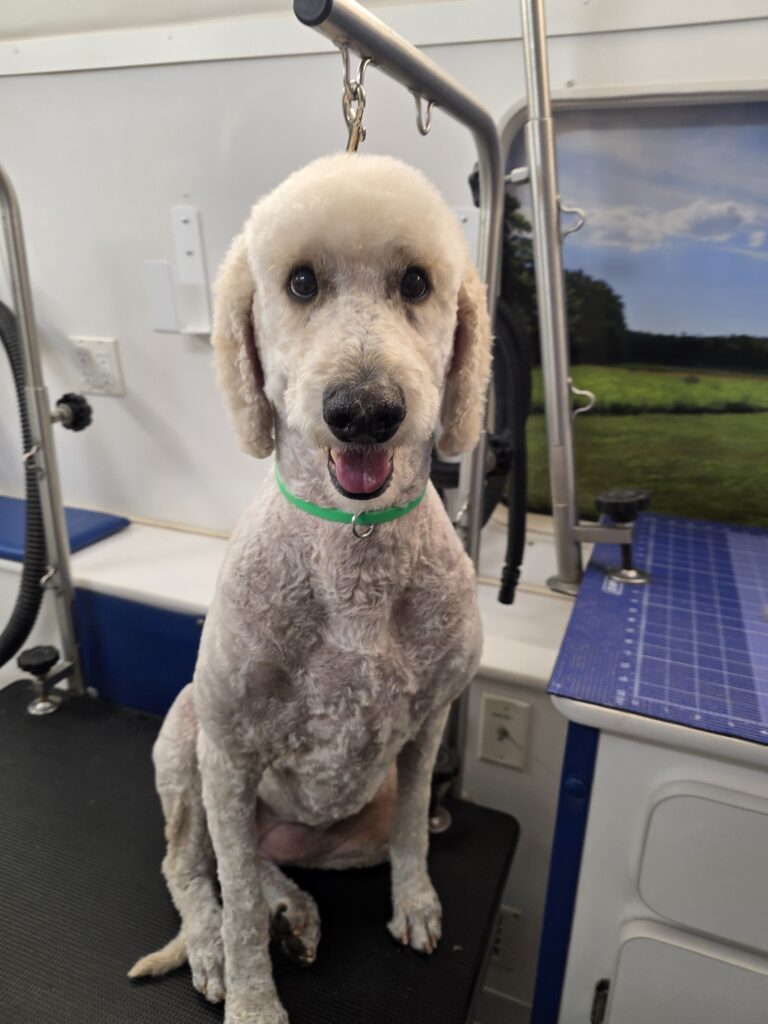
Consider a Labrador and a Standard Poodle. Similar weight, entirely different jobs. The Labrador is maintained through bathing, complete rinsing, high-velocity drying, brushing, and releasing loose undercoat. A Poodle has a long active coat-growth phase, so the coat requires line brushing, combing, regular haircuts and careful preparation before clipping. They may be a similar size, but their grooming requirements are very different.
Identify the structure first
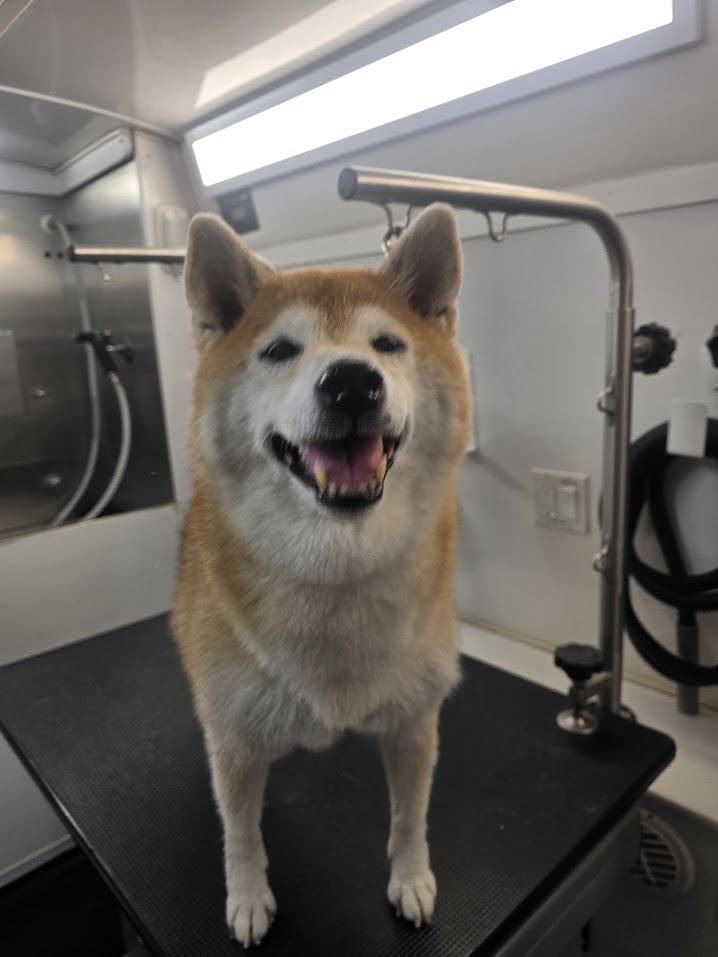
Look past the surface. AKC grooming terminology includes smooth/hairless, double, curly, wire, drop and jacketed coat divisions. Within those broad divisions, density, texture, furnishings, undercoat and hair-growth pattern can vary considerably. Those structural differences determine how I bathe, dry, brush, deshed or clip the individual dog.
This is why a breed guide should tell you what is typical and then tell you what to check on your own dog. I would much rather you understood why your dog’s coat behaves as it does than followed a schedule with the right breed name printed at the top. Several coat structures generate recurring grooming questions, and each needs its own technique. The double-coat guide covers guard hairs and undercoat; the curly-coat guide covers continuously growing, tightly curled hair; and the doodle coat-care guide explains how curl, density, shedding and retained loose hair can vary in mixed coats.
The bath has to reach through the coat
A bath is not about the surface smelling clean. Water and diluted shampoo have to travel through the coat, reach the areas actually carrying oil and debris, and then rinse completely back out.
Dense double coats often need more water and more rinsing than their surface appearance suggests. Longer coats and coats maintained with regular haircuts often benefit from conditioning that adds slip and combability before drying, making the later brushing and combing easier.
When I compare shampoos, I also look at specific, documented environmental attributes. Concentrates reduce packaging for the same volume of working solution, and manufacturer-documented biodegradable or naturally derived ingredients count when they are properly supported. Words like green and natural, on their own, do not.
Drying changes what happens next
On a shedding double coat, high-velocity airflow separates guard hairs and moves loose undercoat out before you brush at all. On a continuously growing coat, a complete dry with the hair separated and straightened is what makes combing, clipping, and scissoring predictable.
Do not judge by the surface. The neck, behind the ears, the hips, beneath the tail — all stay damp after the outer coat feels finished, and moving on early undermines everything after. The Dog Drying & Finishing guides cover towel technique, high-velocity drying, and coat separation properly.
Choose tools for the coat, not the label
A rubber curry, slicker, pin brush, metal comb, and undercoat tool all do different jobs. Smooth coat: a curry to lift loose hair. Long or curly: section-by-section brushing with a comb check to confirm you reached the skin. Double coat: remove loose undercoat without cutting away healthy guard hairs.
Construction matters. Pin length, firmness, spacing, handle control, working depth — these decide whether the tool suits the coat, and nothing else counts until they do. Once two tools do the job equally well, then durability, replaceable parts, repairability, and documented sourcing make the longer-lasting one the better choice.
Not every coat should be clipped shorter
Haircuts are routine maintenance for continuously growing coats. They are not the default answer for a shedding double coat, which is normally maintained through bathing, drying, brushing, and undercoat removal rather than by simply taking the length off.
Where a haircut is right, preparation determines the result. A clean, fully dry, thoroughly brushed and combed coat clips evenly and shows you the true finished length. A dirty, damp, or tangled one will not, whatever the blade. The Dog Clippers, Trimmers & Haircuts section covers blades, guard combs, preparation, and when clipping is appropriate at all.
Use breed as a starting point
Breed gives me a useful expectation and I use it. I just do not let it overrule what the coat is actually doing. Two dogs of the same breed can differ enough in density and condition that one needs twice the drying of the other.
Mixed-breed dogs make this obvious. A familiar breed name may describe the family tree while telling you very little about the coat you are holding.
Each breed guide here connects the breed to a coat type, explains the bathing, conditioning, brushing, deshedding, drying, and haircut work that usually applies, and points toward equipment suited to that job. Start with the Goldendoodle, the Golden Retriever and the Shih Tzu. Start with Green Dog Grooming Guides, or go to Dog Coat Types & Coat Care if you want to understand the coat before choosing anything.