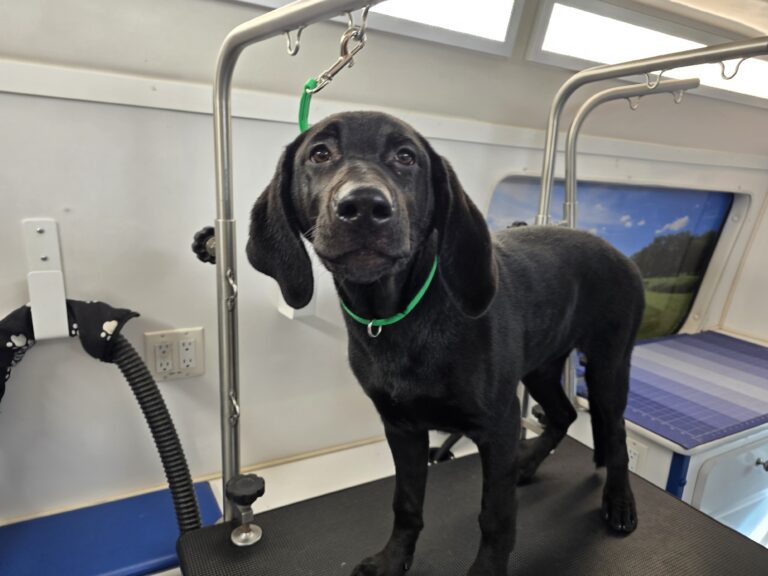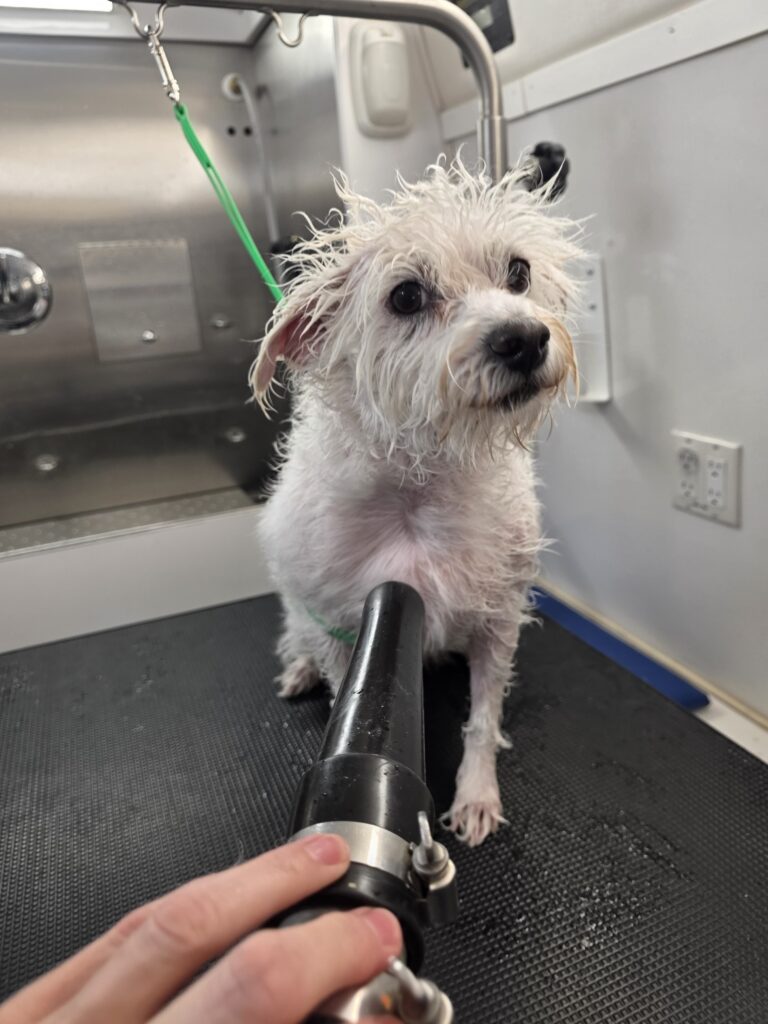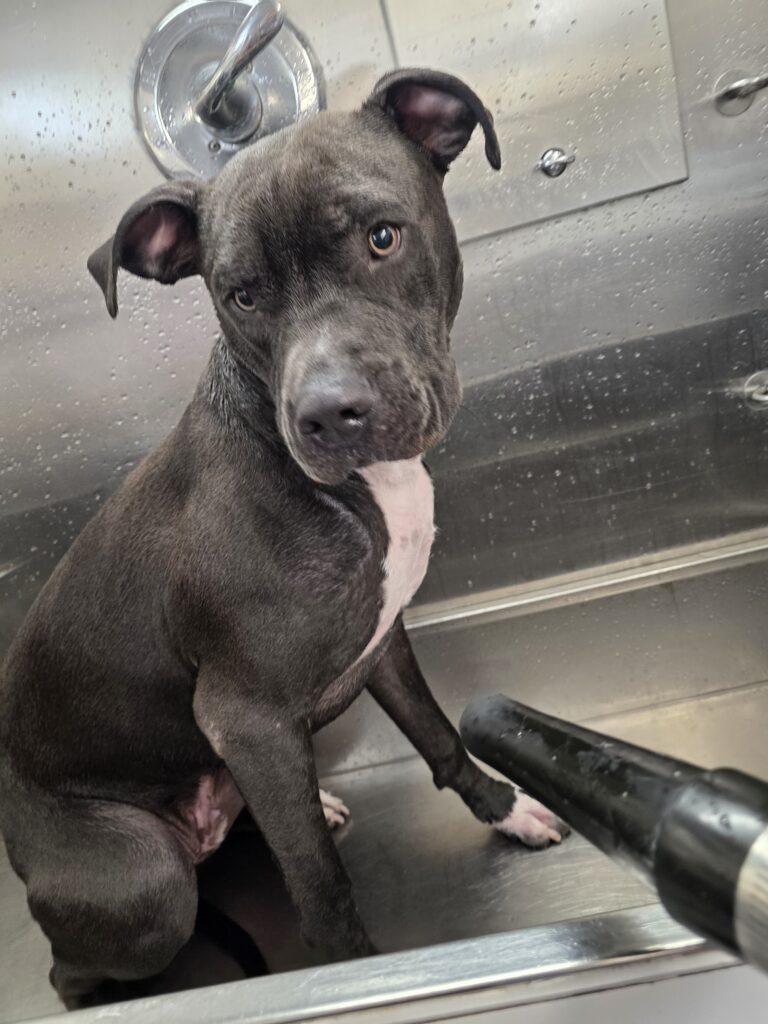
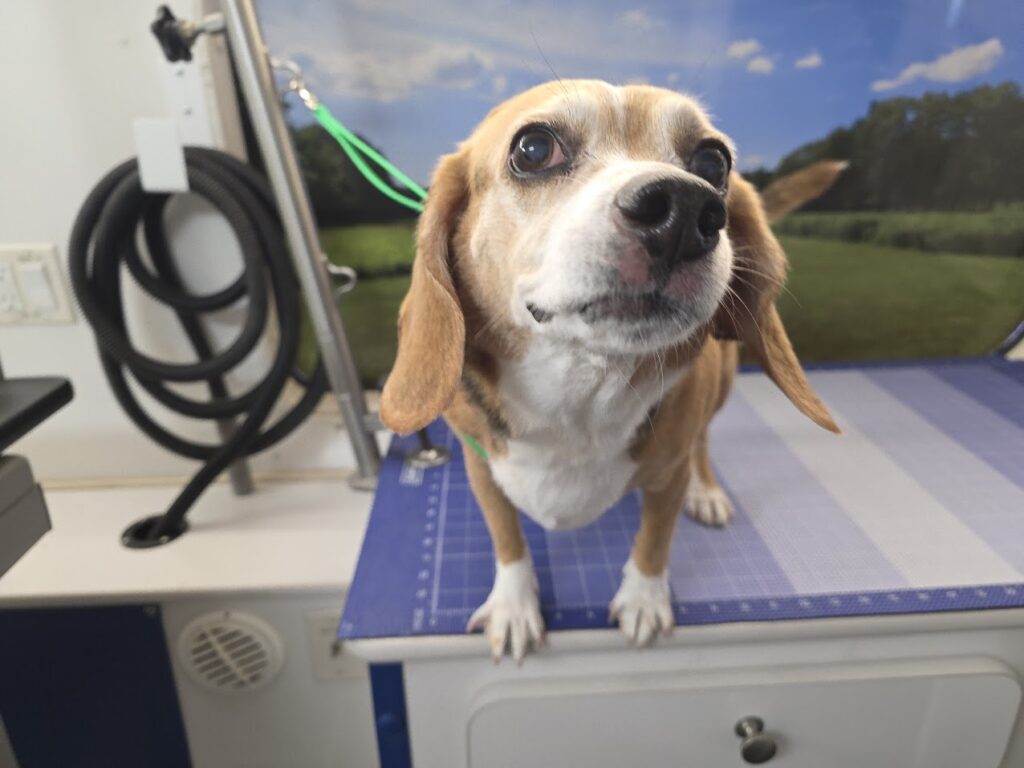
By Yvette Ehler, owner and groomer at Green Dog Mobile Grooming. Grooming since 2009.
I dry the coat thoroughly before brushing or finishing. Drying also helps release loose undercoat and prepares longer hair for an even haircut.
How a coat is dried decides how much loose undercoat leaves, how easily a comb travels through longer hair, how even a haircut turns out, and whether damp patches are hiding under a surface that feels perfectly dry to your hand. Different coats want different things from this stage, but every coat benefits from getting water out properly before anything else begins.
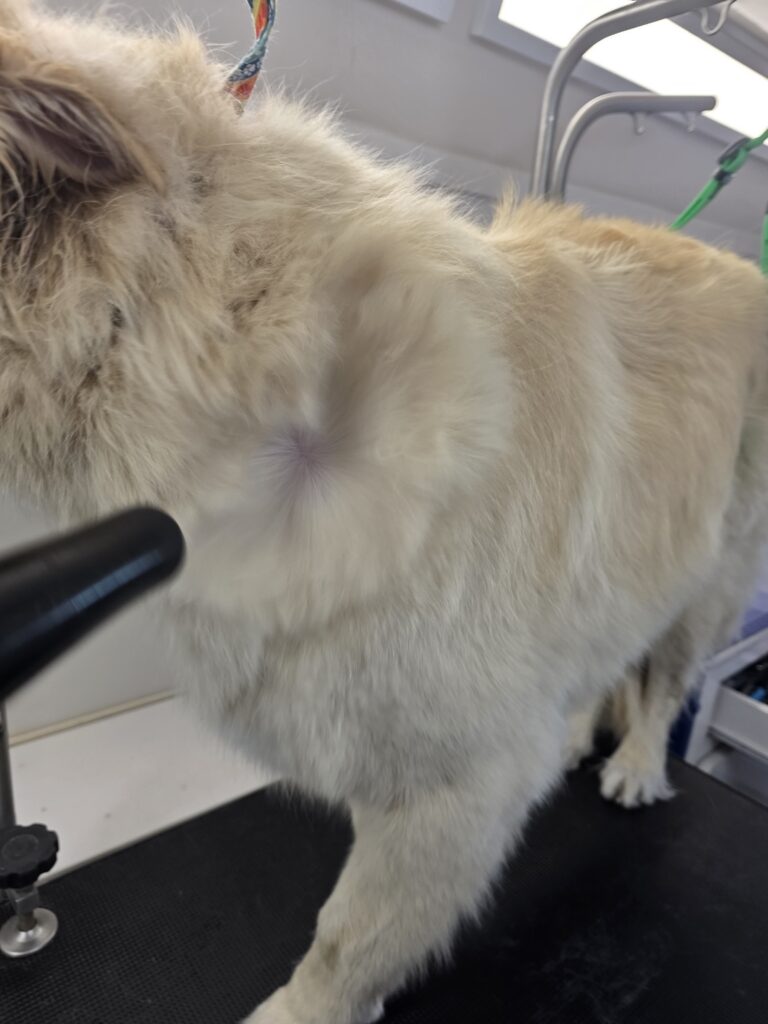
A common mistake at home is stopping when the outside of the dog feels dry. Dense areas — neck, hips, rear legs, ears, tail — stay wet long after the top layer is finished, and that hidden moisture changes how the whole coat behaves. Work in sections and check underneath. Check the coat down near the skin before deciding it is dry.
Get the water out before asking air to do it
I start with towels and remove as much water as I reasonably can. On a smooth coat that may be most of the job done. On long or curly coats, blot and squeeze sections rather than scrubbing — twisting wet hair together creates tangles at exactly the moment you are trying to prepare it for combing.
Reusable washable towels are also the simplest low-waste choice in any grooming setup. What matters is absorbency, durability, and how many wash cycles they survive. A durable towel that can be washed and reused for years generally creates less waste than disposable drying products. The towel guide compares microfiber, chamois and cotton, and covers washing them so they stay absorbent.
High-velocity air does mechanical work
On a double coat, high-velocity airflow separates the guard hairs, drives water out, and releases loose undercoat as it goes. That can cut the later brush-out dramatically, because you are no longer dragging packed loose coat through a damp outer layer.
Use enough airflow to separate the coat — not force for its own sake. Distance, nozzle choice, coat density, and what your dog will actually tolerate all matter. If tolerance is the limiting factor, the guide to introducing a dryer covers building that up in short sessions on a dry coat. The aim is controlled separation and water removal, not the highest setting on the machine.
Curly and drop coats: drying affects the finished trim
On curly and drop coats maintained with regular haircuts, this stage strongly affects the finished trim. A coat that is clean, fully dry, brushed, and combed through its full depth gives a blade or guard comb a more uniform surface to travel across. Residual moisture, retained curl, or hidden tangles can change how the coat feeds through a blade or comb and make scissoring less even.
I work through these coats deliberately, separating and brushing sections during the dry, so I am not discovering a hidden mat with the clipper already in my hand. That preparation is the whole foundation for the Dog Clippers, Trimmers & Haircuts work that follows.
Check the slow spots
Behind the ears, through the neck, around the hips, beneath the tail, in the armpits, and inside dense feathering can remain damp long after the back and sides feel dry. Separate the coat with your fingers or a comb and check near the skin before considering the dry complete.
Damp coat clumps, and clumped coat brushes badly. On thick double coats it also makes it much harder to tell loose undercoat from coat that is simply lying flat beneath the guard hairs.
What I look for in a dryer
Airflow, hose control, nozzle options, noise, heat management, serviceability, and whether parts can be replaced. This is equipment I expect to run for years, so replaceable hoses, switches, brushes, and filters matter more to me than a spec sheet headline.
Longevity is the environmental argument here too. Energy use counts, but replacing a complete machine because one component failed creates avoidable waste when a serviceable option is available. I will not call a dryer environmentally friendly on the manufacturer’s say-so — I look for the specific features that may extend its useful life and reduce premature replacement. The dryer buying guide goes through airflow, variable speed, washable filters and parts availability in detail.
Finishing starts once the coat is dry
Now you can see what you actually have. Double coats may need brushing or carding to release the last of the loose undercoat. Long and curly coats want a comb check before any trimming. Smooth coats often need little more than a final pass with the right brush or curry.
A complete dry separates the coat, removes loose fiber, and makes the brushing or trimming that follows much easier to do accurately.
A good dry makes the rest predictable
Thorough rinse, water removed, deeper layers actually dry — and brushing and finishing stop being a fight. You can see what the coat is doing instead of wrestling damp clumps and hidden undercoat. That is what makes the whole routine repeatable at home, and it gives you a clear standard for what “finished” means.
Shedding coat? Continue with Brushing, Combing & Deshedding. Haircut coat? Go to Dog Clippers, Trimmers & Haircuts.