By Yvette Ehler, owner and groomer at Green Dog Mobile Grooming. Grooming since 2009.
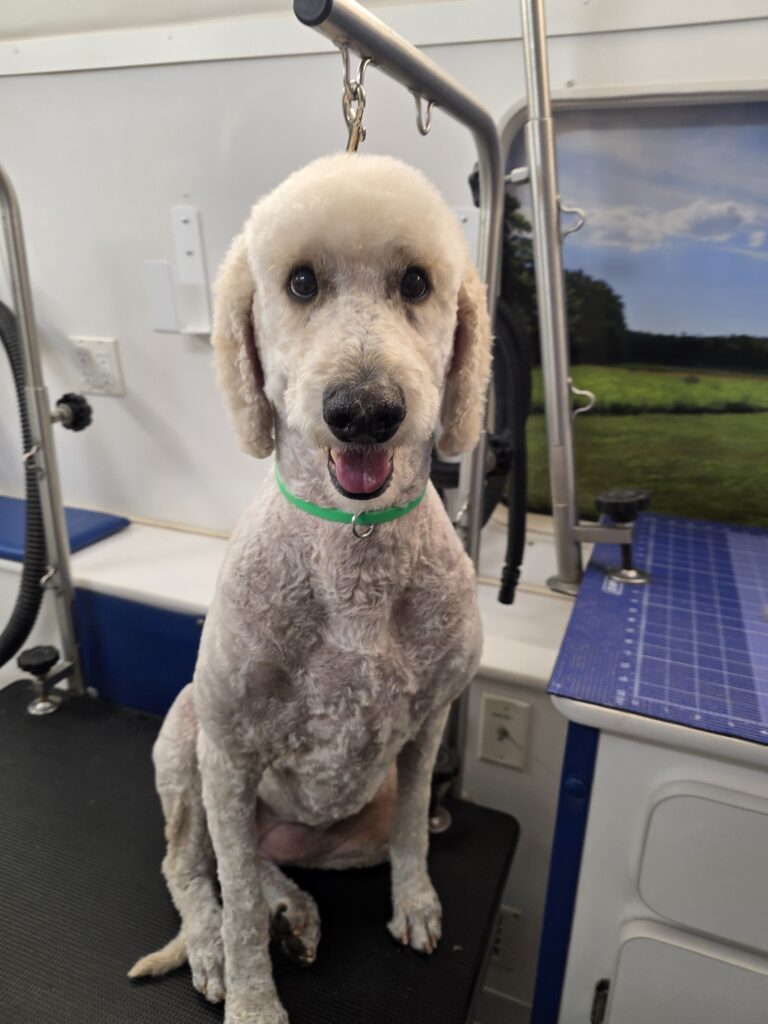
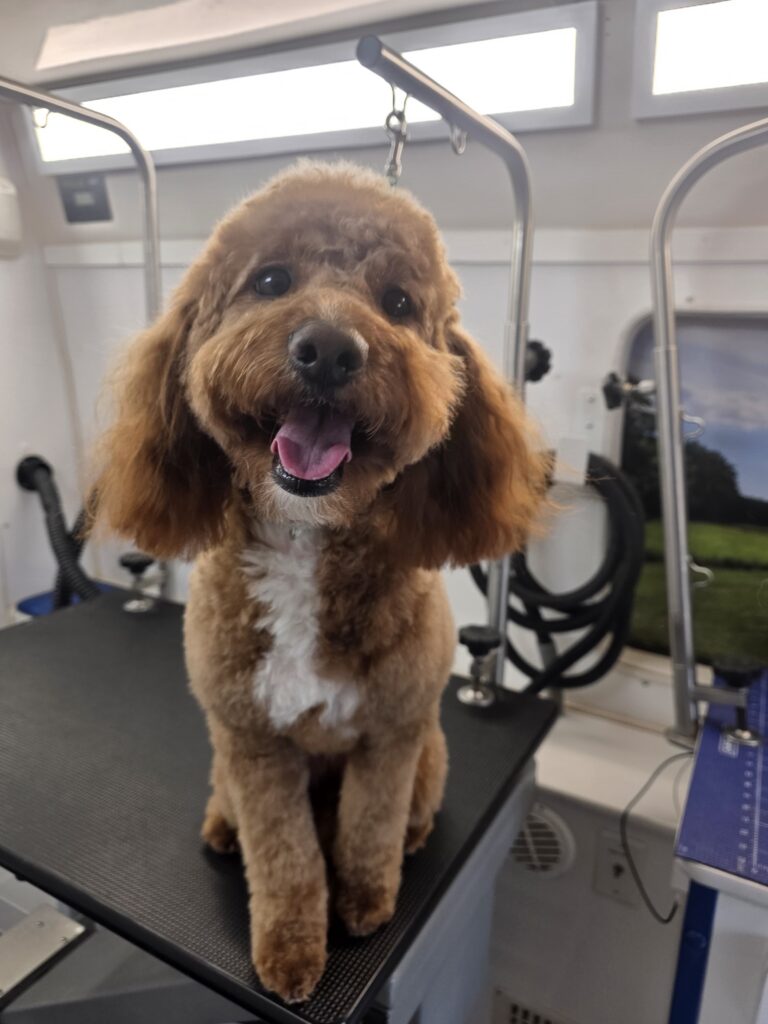
A doodle can look brushed on top and still have mats close to the skin. Those mats may mean a shorter haircut is needed. I check with a comb before deciding how much length I can leave.
Doodles do not all have the same coat. Curl, thickness, shedding, and trapped loose hair vary from dog to dog, so the routine needs to fit the coat in front of me.
Why the surface can hide tangles underneath
A slicker brush moving only across the surface of a long wavy or curly doodle coat may meet little resistance and leave the outer coat looking well brushed. Underneath that tidy surface, the loose hair sitting against the skin is still there, and it is steadily binding with the growing coat into a felted layer. A common first sign is a comb catching beneath a surface that still looks brushed.
Friction accelerates this in predictable places. Behind the ears, under the collar or harness, in the armpits, along the inside of the back legs, around the tail and under any area where the dog lies down are where mats form first and worst. A coat can be clear in most areas and tightly matted in these friction points, so check them individually rather than judging the coat only by its overall appearance.
Line brushing is the technique that actually reaches the skin
Line brushing means working the coat in small horizontal sections rather than brushing over the whole dog. Lay the coat over with one hand so you expose a parting down to the skin, brush the narrow band of hair below that parting from the skin outward, then let the next inch of coat fall and repeat. You are working upward through the dog in lines, and each line is finished before you move on.
Start where the coat is easiest so the dog settles into the process, then move to the friction points while you both still have patience. A whole dog does not have to be done at once. It is fine to divide the work into shorter sessions—for example, legs one day and the body the next—rather than rushing through the entire coat at once.
Use a metal comb to check the full coat depth
A slicker can smooth the surface, while a metal comb checks whether the full coat depth is clear. After you have line brushed a section, run a comb through it from the skin outward, and if the comb passes cleanly to the skin along the full length of the tooth, that section is finished. If it stops, snags or has to be forced, the section is not done no matter how good it looks.
This habit often improves results more than adding another tool. Owners who comb-check learn very quickly where their own brushing routine is falling short, often in the same friction-prone areas. Once you know that, you can spend your effort where it matters most instead of brushing the easy open areas that were never going to mat.
What brush works best for a doodle coat?
Pin length is the specification that matters most and the one packaging rarely makes clear. A slicker with pins too short for the coat length cannot reach the skin, so it grooms the outer layer and leaves the problem intact, which is exactly the failure this coat type is prone to. Match the pin length to the length of coat you are actually maintaining, and go longer as the coat grows out between haircuts.
Firmness matters next. A very soft slicker flexes away from the coat instead of working through it, and a very stiff one is uncomfortable against skin and can leave brush burn if used with pressure. The pins should be springy enough to give when they meet resistance. Head size is a comfort question more than a performance one, since a smaller head gives better control around legs, faces and ears while a larger one covers a body coat faster.
Durability is worth weighing at the point of purchase rather than after. A slicker with a pad that separates from the handle, or bent pins that never recover, becomes useless quickly, and a tool that survives years of use avoids premature replacement. When I compare tools I look for solid construction, replaceable or repairable parts where a manufacturer offers them, and documented materials rather than an unexplained claim on the packaging.
What to look for in a comb
A metal comb with coarse and fine tooth spacing on one bar is useful for checking the full depth of many longer doodle coats. The wider end works through coat that is nearly finished, and the finer end is the final check. What you want is a tooth long enough to reach the skin through the coat length you keep, because a short-toothed comb will pass happily through the outer half of the coat and tell you nothing useful.
Solid metal construction and smooth, rounded tooth tips are the main specifications to check. Teeth that are rough at the tip drag and catch, which makes the dog dislike the comb and makes you use it less. A well-made comb can remain useful for many years, which is worth remembering when comparing it against a cheaper one you will replace repeatedly.
Bathing and drying decide how the coat combs afterward
Before bathing a longer doodle coat, check the full coat depth for tangles and matting. Water, shampooing, towel friction and subsequent drying can make existing tangles more compact and harder to separate, so significant matting should be addressed before a routine bath.
Rinse a dense wavy coat thoroughly. Product residue can leave the coat tacky and increase friction, which encourages tangling. Keep rinsing until the water runs clear and the coat no longer feels coated.
Conditioner is doing a specific job here rather than a cosmetic one. It reduces friction between hairs so the comb can pass, which directly reduces how quickly the coat re-tangles. When I compare shampoos and conditioners for this coat type I look at rinseability first, then dilution ratio, since concentrates need less product volume to make a given amount of working solution and a stated ratio lets you check the arithmetic rather than guess at it. Where two products perform alike, documented ingredient information and refill availability are a reasonable way to choose between them. Any environmental or formulation claim on a bottle is the manufacturer’s claim, and I treat it as one.
Then dry the coat while keeping the hair separated and straight. Air drying can allow existing bends and tangles to tighten as the coat dries. The drying guide covers the technique in more detail; controlled airflow and brushing make the finished coat much easier to comb through.
When the coat has gone past brushing
When a coat is tightly felted against the skin, extensive dematting can be painful and can irritate the skin. In that situation, clipping beneath the matting is often the more comfortable option for the dog, even when it means a shorter haircut than originally planned.
If you want to avoid that outcome, the schedule is what does it. Most fleece coats kept at a moderate length need genuine line brushing and a comb check two or three times a week, more when the coat is growing out or when the dog is swimming, wearing a harness daily or lying on rough surfaces. If skin looks red, sore or irritated under a mat, that is a question for a veterinarian rather than something to work through with a brush.
The mechanics here apply well beyond doodles, and the coat types guide explains how wavy doodle coats relate to the broader coat divisions used throughout the Grooming Guides. If the haircut itself is what you are trying to understand, the clippers and haircut guide explains why blade and guard comb length depend entirely on the coat preparation described above. For the tools themselves, the home grooming tools guide covers what a working kit actually needs. If your dog is a Goldendoodle specifically, the Goldendoodle guide deals with the coat change that can make home maintenance unexpectedly difficult.