By Yvette Ehler, owner and groomer at Green Dog Mobile Grooming. Grooming since 2009.
I prepare the coat before switching on the clippers. A clean, fully dry, brushed, and combed coat gives the blade an even path.
A dirty, damp, or tangled coat makes the equipment work harder, drags on the dog, and produces a finish nobody wanted. When a home haircut turns patchy, incomplete coat preparation is one of the first things to check.
First: does your dog need a haircut at all?
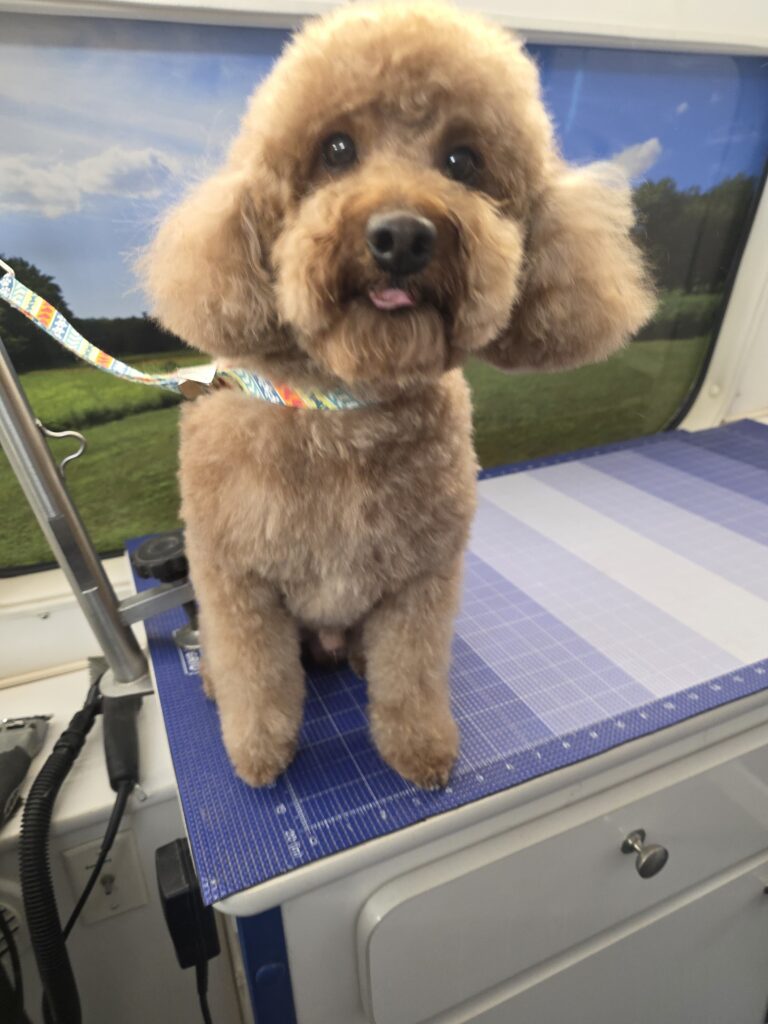
Coats such as a Poodle’s keep gaining length between appointments. They need regular haircuts as well as brushing and combing.
A shedding double coat has a different growth and shedding pattern. Routine coat maintenance centers on bathing, thorough drying and removing loose undercoat rather than shortening the entire coat with clippers. The dense double coat guide explains what to do instead, and why the shedding usually gets worse rather than better after a shave.
Blades set the length
Detachable blades are identified by numbers and cutting specifications. Different blades leave different amounts of hair — but check the manufacturer’s blade chart rather than assuming a higher or lower number means what you expect. The numbering is not intuitive and guessing it wrong on a dog is an expensive mistake. The clipper buying guide explains A5-style detachable-blade compatibility on supported Andis, Oster and Wahl models, along with blade availability and maintenance.
Blade choice also depends on the area you are working and the condition of the coat that day.
Guard combs leave more length — if the coat allows it
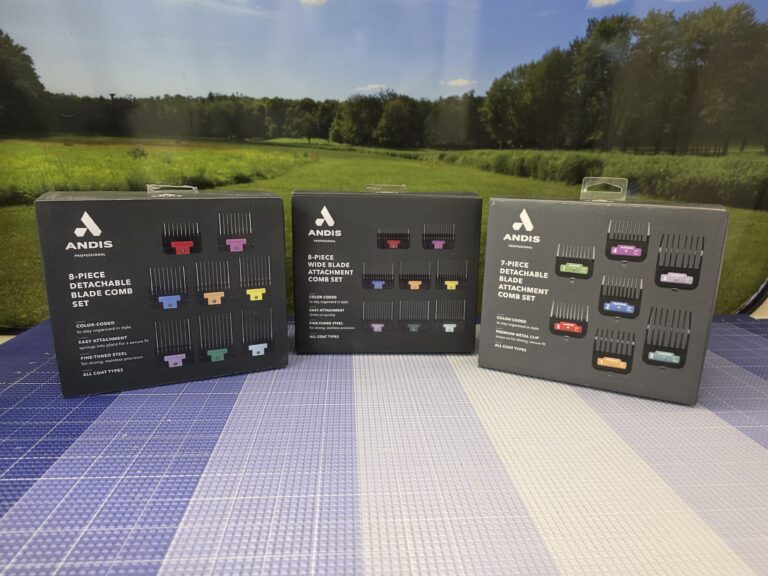
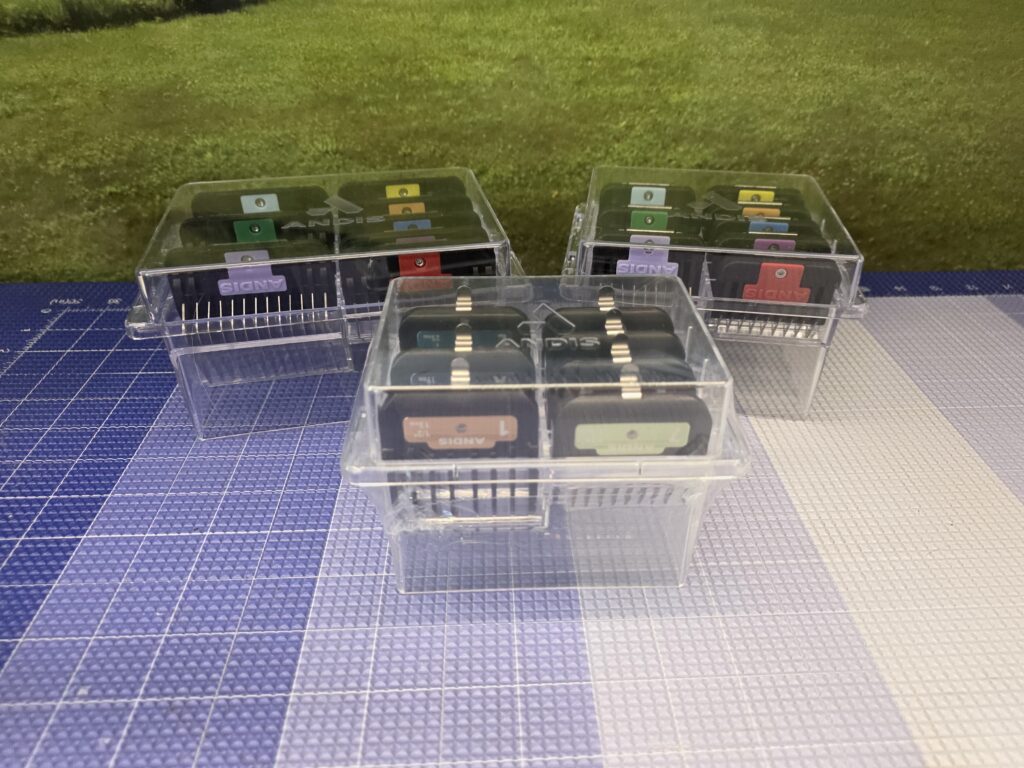
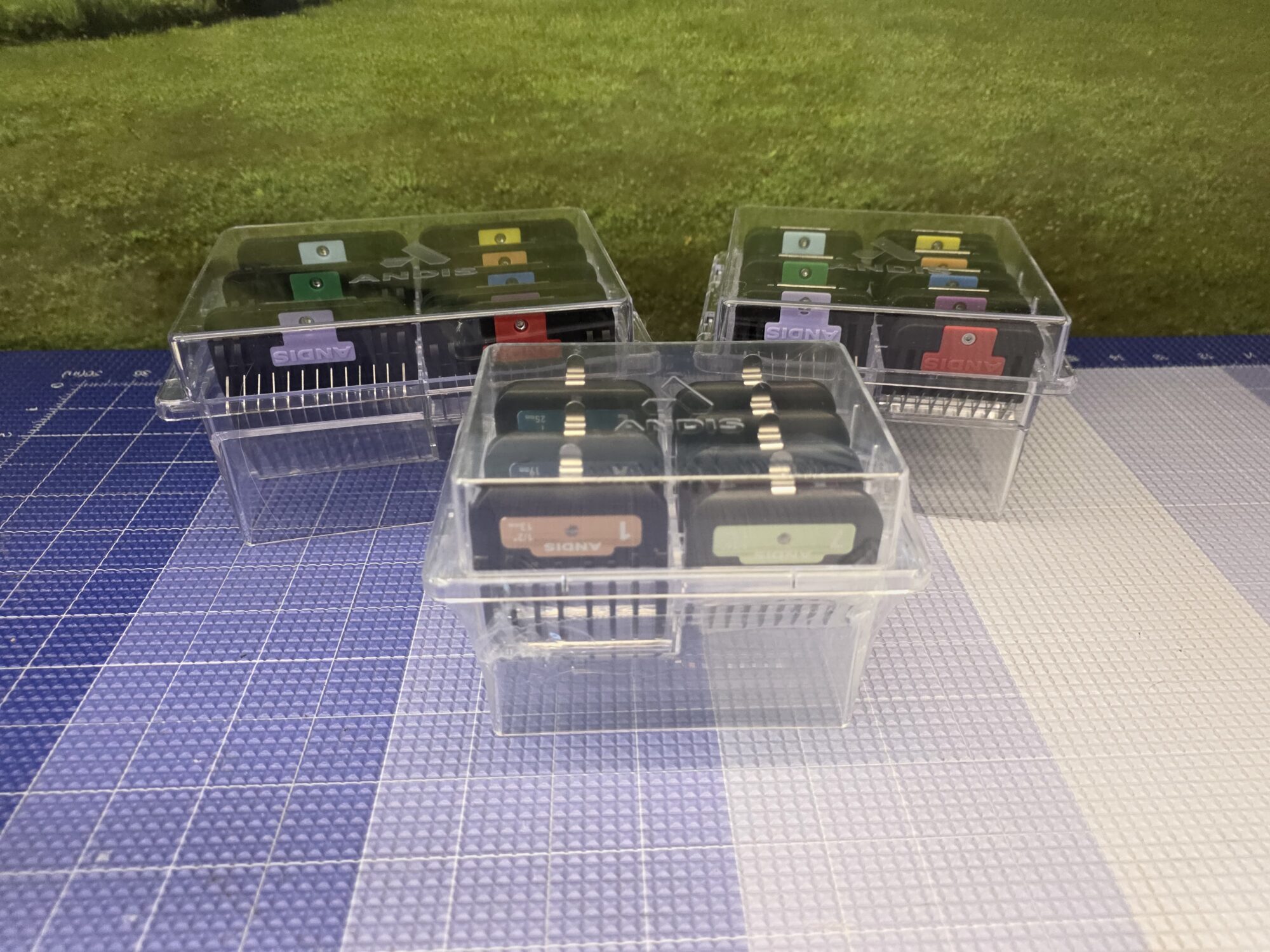
A guard comb fits over a blade and leaves a longer finish. It only works on a coat that is clean, fully dried, brushed, and combed straight enough for the comb to pass through.
A guard comb cannot pass evenly through matting. If hairs have become densely entangled or felted close to the skin, selecting a longer guard comb cannot preserve that length; the coat first has to be safely separated and combable.
Preparation determines how evenly the coat clips
Bathe, rinse completely, dry thoroughly, brush, then check with a comb. On curly coats especially, proper drying separates and straightens the hair so the clipper leaves something even behind it.
Incomplete preparation can leave an uneven finish and make the clipper work harder. The curly coat guide covers line brushing and comb checking in detail, and the doodle coat-care guide addresses wavy and loosely curled doodle coats that can mat close to the skin.
Blade temperature — check constantly
Clipper blades accumulate heat from friction during use. Check blade temperature frequently against your own skin, and rotate, change or cool blades according to the manufacturer’s instructions.
A blade should never be uncomfortably hot against your dog. An overheated blade is a common and preventable way to injure skin during a home groom, and a dog may not react before the blade has become too hot.
Skin is not flat
Loose areas, folds, armpits, tuck-up, feet. All of them need particular care. Keep the skin positioned safely and never force a blade under a tangle you cannot see through.
Go slowly around anything that moves.
How matting limits haircut length
When matting sits tight against the skin, the available length is whatever can pass safely underneath it — regardless of the style you had in mind. The coat’s condition determines which blade or comb can pass underneath the matting safely.
Dragging a longer guard comb through tight matting is not an alternative. It hurts, and it does not work.
Look after the equipment
Hair and product build up around blades and clipper mechanisms. Clean, oil, and maintain per the manufacturer’s directions.
Good clippers last many years when blades can be sharpened or replaced and parts stay available — which is worth weighing against a cheap model that becomes waste the moment one component fails. A durable, repairable clipper may cost less over time and avoids replacing the entire tool when a serviceable component wears out.
Start with something achievable
For a first home haircut, one simple practical length is far easier than a styled pattern with multiple lengths and detailed scissoring. Learn to prepare the coat and handle the equipment safely first. The styling can come later, once your dog trusts the process and you trust your hands.
For the preparation that comes first, see Dog Bathing & Conditioning and Dog Drying & Finishing.